
Along the shallow coastlines of North America, where salt marsh meets open water and tides shape the rhythm of life, swims one of the most iconic inshore species in the world. The redfish, also known as red drum, is a powerful predator in this inter-tidal zone, often giving away its presence only through the faintest push of water or the slow wave of a tail above the surface.
From the Gulf Coast of Texas to the marshes of Louisiana and the tidal flats of Florida and the Carolinas, redfish have become a defining species of the American saltwater experience. For the fly angler, they offer something rare, a perfect blend of accessibility, challenge, and visual excitement.
Redfish thrive in shallow coastal systems where structure, tide, and food intersect. These fish are built for life in dynamic environments. Estuaries, lagoons, mud flats, and flooded marshes all form part of their world.
Perhaps the most iconic image in redfish angling is that of tailing fish. As the tide rises and floods the grass, redfish move in to feed on crabs, shrimp, and small baitfish. With their heads buried in the grass and tails waving above the surface, they become both visible and vulnerable, though never easy. This is where fly fishing for redfish becomes something more than technique. It becomes observation, timing, and quiet movement.
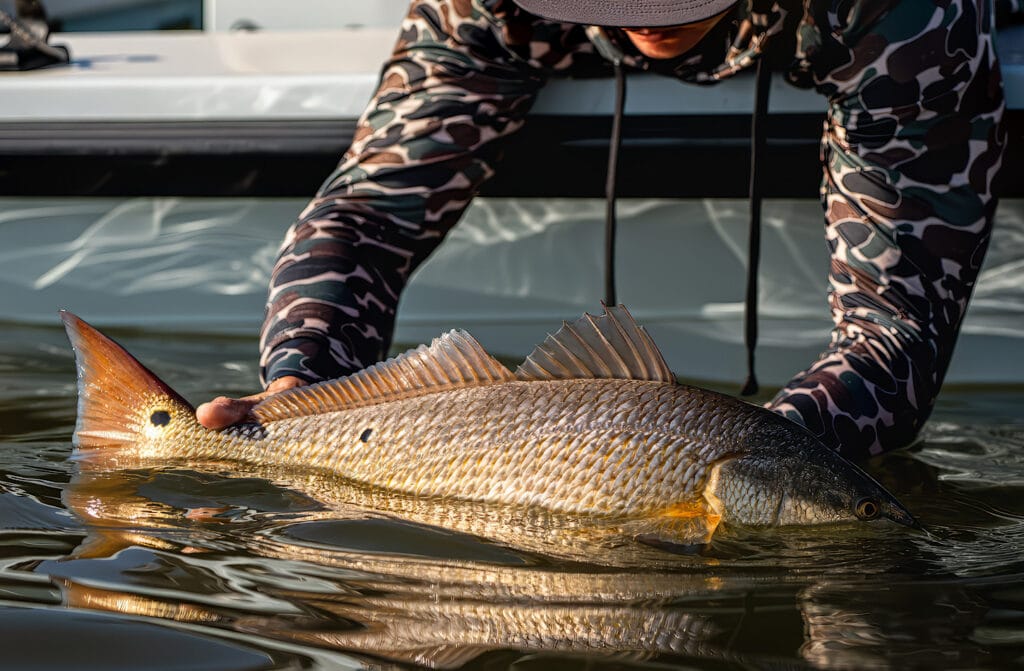
Success in redfish fly fishing begins long before the cast. It begins with understanding water. Tides dictate everything. A rising tide brings opportunity, pushing fish into areas that are otherwise too shallow. A falling tide pulls them back into channels and drains where they concentrate and feed more aggressively. On a high tide, the focus shifts to flooded grass. Anglers pole or wade slowly, scanning for tails, wakes, or subtle disturbances. On a dropping tide, attention turns to narrow outflows where bait is swept from the marsh. These drains can hold multiple fish, often competing for food. Light and wind also play a critical role. Clear skies make spotting easier, but can make fish more cautious. Wind breaks up the surface and can hide both angler and fish, though it demands more precise casting.
Redfish are tolerant compared to many saltwater species, but they are not careless. A rushed approach will almost always end in a push of mud and a disappearing wake. Movement must be deliberate and quiet. Whether on foot or on a skiff, the goal is to close distance without alerting the fish. Anglers often lead the fish rather than casting directly at it, placing the fly in its path and allowing the fish to discover it naturally. Positioning is everything. A well placed cast of ten meters is far more effective than a long cast delivered without control.
Fly choice for redfish is less about imitation and more about suggestion. Crab patterns are among the most effective, especially when fish are feeding in shallow grass. These flies are typically weighted to land softly yet sink quickly enough to reach the feeding zone. Shrimp patterns are equally important and often more versatile. They work well in slightly deeper water and along the edges of channels. Baitfish patterns come into play when targeting larger fish or when redfish are actively chasing moving prey. Color choices tend to reflect water clarity. Natural tones such as olive, tan, and brown dominate in clear water, while darker or more contrasting colors help in murkier conditions. Presentation, however, matters more than pattern. The fly should land with minimal disturbance, then move in a way that suggests life without alarm. Short strips with pauses often trigger the take, especially when the fish is already focused on feeding.
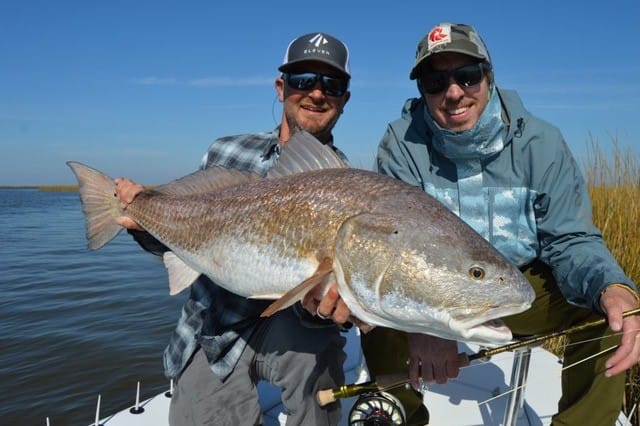
Few moments in fly fishing match the experience of watching a redfish eat. Often the fish will track the fly slowly, its body language shifting as it closes the distance. A slight tilt downward, a subtle acceleration, and then a flash of white as the mouth opens. In shallow water, this can happen within clear view, turning the take into a visual event that stays with an angler long after the day ends. The key is restraint. Striking too early pulls the fly away. Instead, anglers strip set, maintaining tension and allowing the fish to turn with the fly. Once hooked, redfish are powerful and determined. They make strong runs and use their broad bodies to their advantage, especially in shallow water where they can dig toward structure or grass. While they may not have the blistering speed of some pelagic species, their strength and persistence make them formidable on fly tackle.
Redfish can be targeted throughout the year, but their behavior shifts with the seasons. In warmer months, fish spread out across flats and marshes, often in smaller groups. Sight fishing dominates, with anglers focusing on individual fish or small pods. In cooler months, redfish often gather in larger schools. These fish may be found in deeper water or along channels, and while they are easier to locate, they can be more selective. Each season requires a different mindset. Summer rewards patience and precision. Winter rewards observation and adaptability.
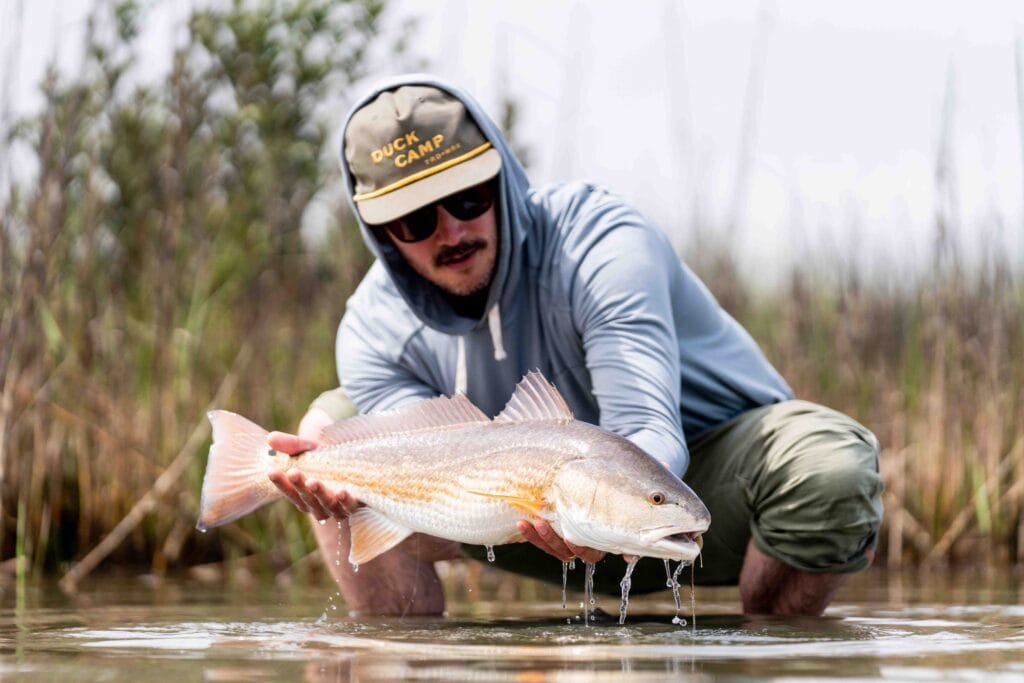
The redfish is more than a target species. It is a symbol of the coastal environments it inhabits. Healthy populations depend on intact marsh systems, clean water, and sustainable management. In many regions, conservation efforts and responsible angling practices have helped ensure that redfish remain abundant and accessible. For the fly angler, this means opportunity. Not just to catch fish, but to experience a style of fishing that is immersive, visual, and deeply connected to place.
Because in the end, chasing redfish is not only about the fish. It is about the light on the water, the movement of the tide, and the quiet moment when everything comes together and a copper shadow turns toward your fly.
To discuss fishing for redfish, please contact Alex Jardine or call the office on +44 1980 847389.
About the author: Alistair Routledge