Iceland offers some of the most exciting and varied trout and sea trout fishing in Europe, and 2027 looks set to be another fantastic season to experience it. From the chance of huge, hard fighting sea trout at Battle Hill and the technical pursuit of large wild brown trout on Laxardal and Myvatnssveit, to the intimate fishing on Reykjadalsá and the wild, remote waters of the Icelandic Highlands, there is an exceptional range of opportunities. Here is an outline of our favourite choices:
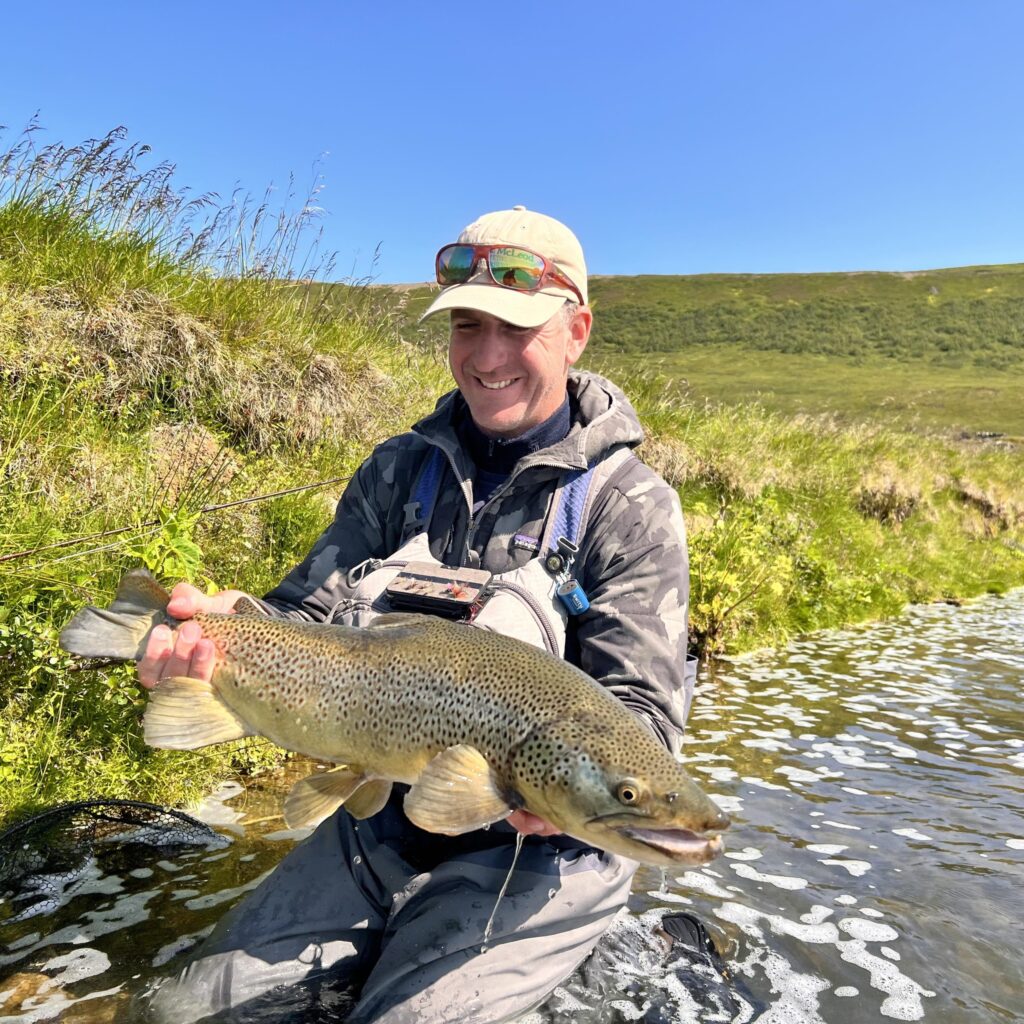
Laxardal is arguably the jewel in Iceland’s crown when it comes to wild brown trout and should be at the top of the list for anglers looking for genuinely large fish on dry flies and small nymphs in 2027. Situated on the upper Laxá I Adaldal in northern Iceland, the Laxardal beats extend for around 14 km and are divided into six beats, with two rods on each. The river is broad and relatively shallow, with crystal-clear water, lava shelves and long flats where large trout can be seen rising in summer. Fish of 5–7lb are caught regularly, 8–9lb fish are encountered each season and trout over 10lb have been taken. The fishing is technical and demands stealth, accurate presentation and good watercraft, but this is precisely what makes Laxardal so compelling. The principal season is June to August, with the summer months providing the opportunity to sight-fish to confidently feeding trout, often with tiny dries and nymphs. Anglers stay at Raudholar Lodge, a comfortable lodge overlooking the river, with 12 en-suite twin rooms, a wader room, hot tub, sauna and Wi-Fi. For the serious brown trout angler, Laxardal represents one of Europe’s outstanding challenges.
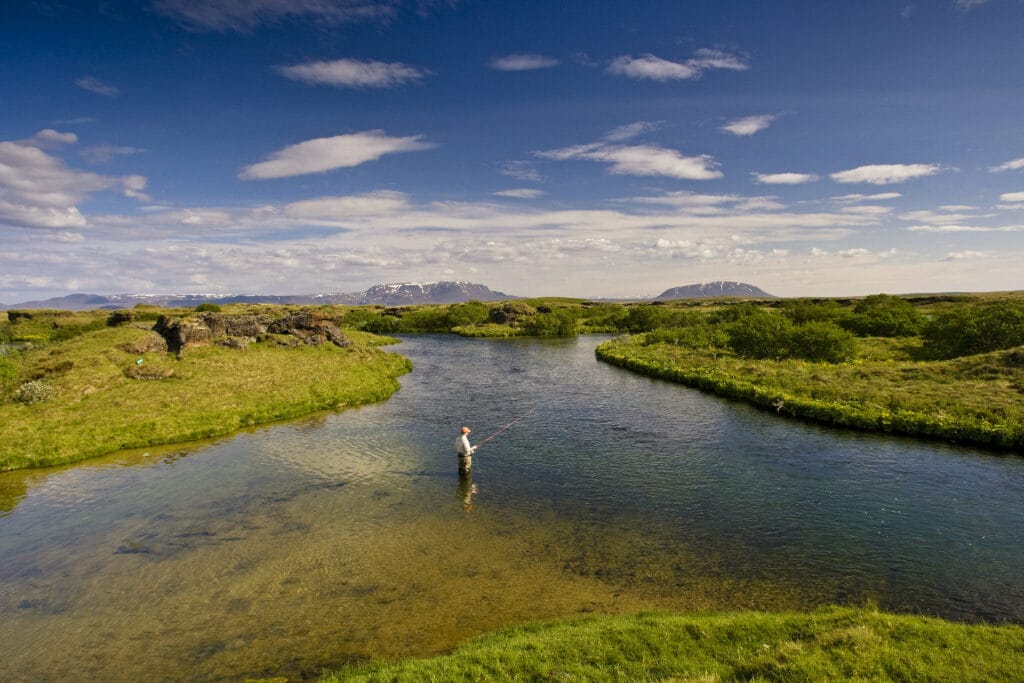
Myvatnssveit, immediately upstream, provides a wonderful contrast to Laxardal while remaining part of the same extraordinary wild brown trout system. The river flows directly out of Lake Myvatn and the Myvatnssveit beats cover roughly 12–14 km of beautifully braided water, with fast runs, pocket water, glassy pools and lava shelves creating an extraordinary variety of lies. The water is exceptionally clear, although the black volcanic sand can give a misleading impression of depth, and the trout are powerful fish that live in fast flowing water. Average fish are around 2–3lb, but trout of 8–10lb are encountered, making this a fishery where the next rise could always be something very special. Small flies are the key, with upstream dry fly and nymph techniques particularly effective as trout feed heavily on the abundant midge and other insect life during Iceland’s short summer. Hof Lodge, with 16 rooms, provides full-board accommodation right amongst the beats. It is rustic, but functional. The combination of Myvatnssveit’s visual fishing and Laxardal’s larger fish makes the two an exceptional combination for a 2027 trout week.
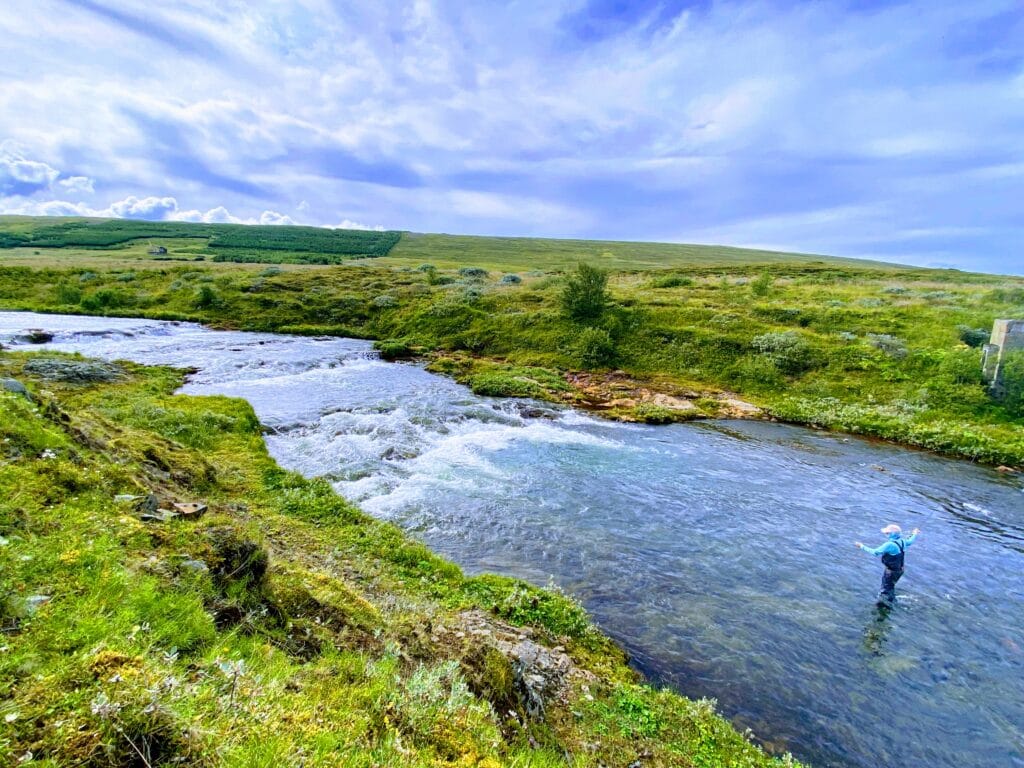
Reykjadalsá offers a completely different style of trout fishing and is particularly attractive to anglers who enjoy intimate, technical river fishing rather than simply chasing the largest fish. This 35 km tributary of the Laxá I Adaldal is a beautiful small river, with fast upper water, countless little pools and deep holes giving way downstream to long glides and slow, clear pools where brown trout feed confidently. The average trout is around 1–2lb, but fish to 8lb are present, and recent seasons have seen an encouraging improvement in both numbers and average size. Dry-fly fishing can be superb, particularly with midge and Bibio patterns, while nymphs, soft hackles and streamers provide alternatives when conditions dictate. The river is available from May through September, giving it one of the longest trout seasons in this part of Iceland. Fishing is limited to just six anglers, creating a wonderfully private feel, while the recently refurbished lodge has four en-suite double bedrooms, comfortable communal areas, Wi-Fi and the option of either self-catering or a fully serviced arrangement with a chef. Its proximity to Lake Myvatn, Húsavík and Goðafoss also makes it an excellent destination for a mixed fishing and sightseeing holiday.
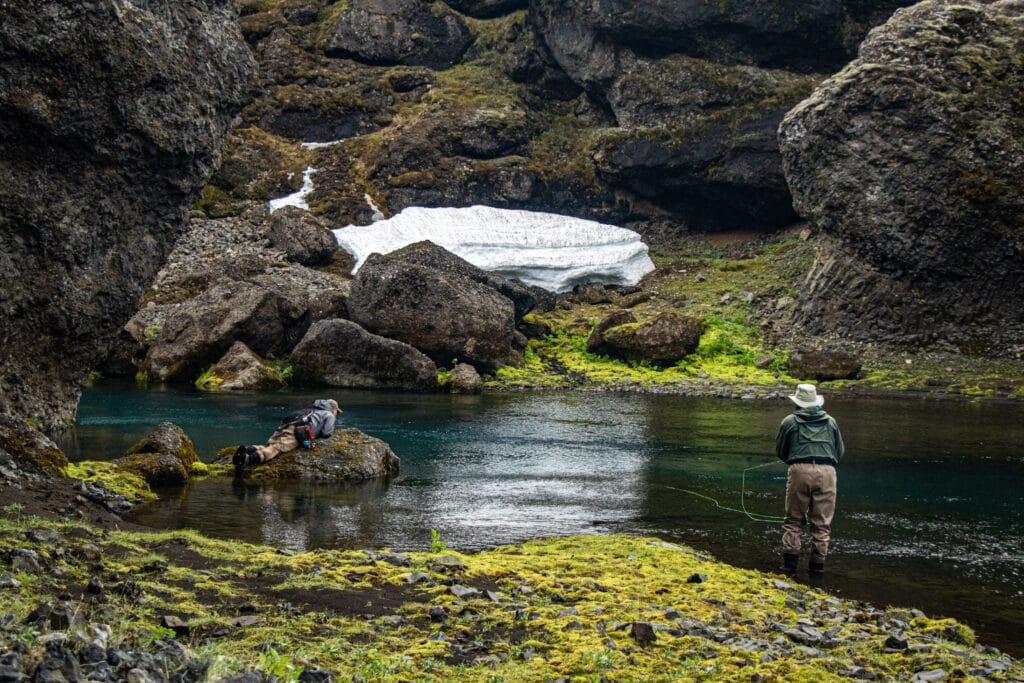
The Icelandic Highlands provide perhaps the greatest contrast of all and are ideal for anglers who want adventure, solitude and the chance to discover their own water. Rather than fishing a tightly managed beat, the Highlands open up a vast landscape of streams, rivers and lakes containing wild brown trout and, particularly, powerful Arctic char. The Kaldakvísl and Tungnaá are two of the standout options. Kaldakvísl offers around 16 km of spectacular water with waterfalls, canyons, fast runs, rock pockets and slower pools, where Arctic char average 2–4lb but fish over 7lb are present, alongside some good brown trout. Tungnaá is even more unusual: once a milky glacial river, it became gin-clear following hydro-electric development and now provides extraordinary sight-fishing for Ice Age brown trout and Arctic char, with fish averaging 2–4lb and specimens reaching around 12lb.
Moving onto sea trout:
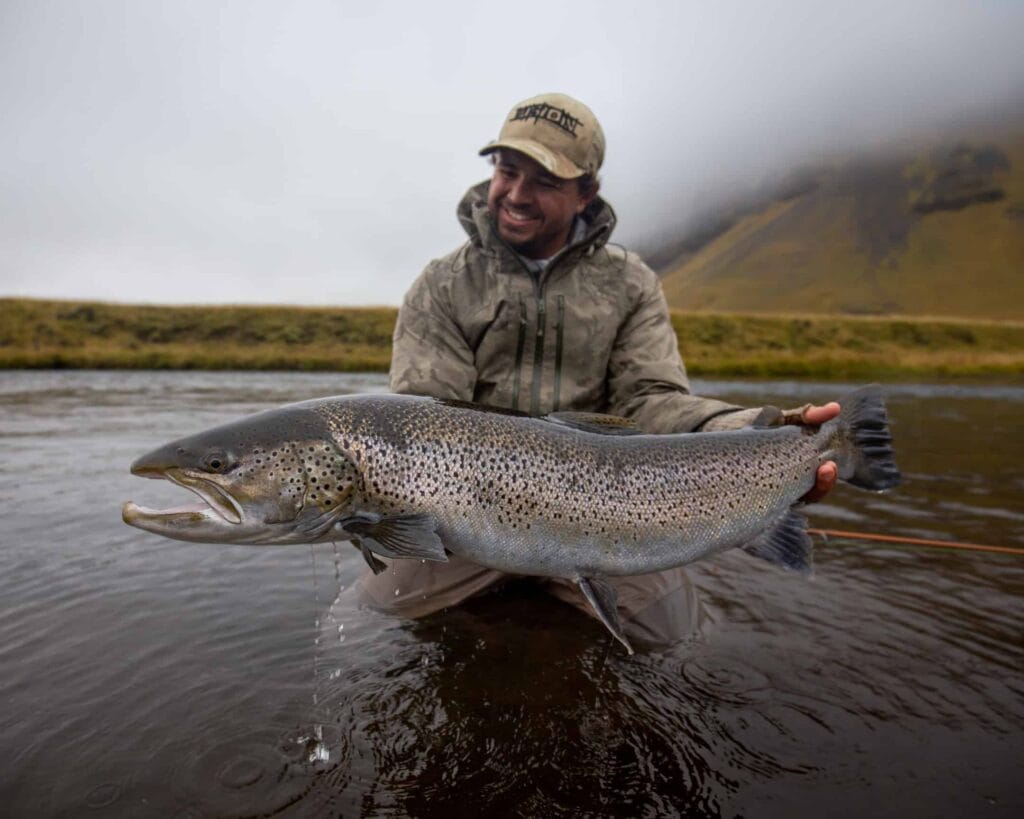
Battle Hill Lodge should be the first choice for anyone looking to make 2027 the year of an Icelandic sea trout adventure. Widely regarded as Iceland’s premier dedicated sea-trout operation, Battle Hill is based in the south east of the country and gives anglers access to a superb collection of rivers, principally the Fossálar and Vatnamót, with additional fishing on rivers including Geirlandsá, Jónskvísl and Grenlækur. The diversity is exceptional, from the beautiful, lava-fringed Fossálar, with around 15 km of water and just five rods, to Vatnamót, the large junction where several rivers meet and where sea trout congregate before moving into their tributaries. Fish of 20lb and more are taken here, making this one of the very few places in Iceland where genuinely huge sea trout are a realistic possibility. Battle Hill Lodge itself is a recently renovated farmhouse overlooking the Fossálar, a lava field and the Vatnajökull Glacier. Accommodation is comfortable and homely rather than luxurious, with four twin and two single rooms, and the operation runs from spring through to autumn, with the principal sea-trout opportunities in the early and, particularly, late season. The combination of enormous fish, varied rivers, relatively intimate fishing and spectacular volcanic scenery makes Battle Hill the standout sea trout destination for 2027.
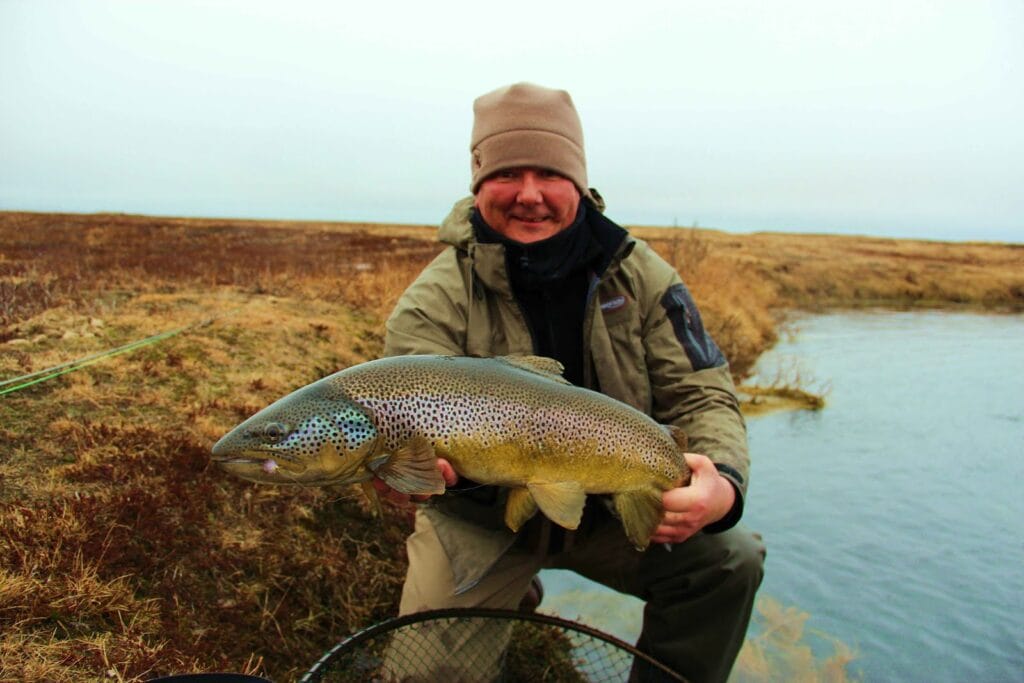
Litlá in northern Iceland offers a very different but equally fascinating sea-trout experience. Often considered one of Iceland’s finest sea-trout and brown-trout rivers, the Litlá flows from Lake Skjálftavatn across volcanic plains before eventually reaching the Atlantic. A series of geothermal springs keep the river from freezing during winter, allowing fish to feed throughout the year and producing excellent populations of sea trout, brown trout and Arctic char. The season opens in early April, when the first sea-trout runs can provide excellent sport through to June, while the summer months are particularly good for brown trout and char. The river remains open into September, when another excellent opportunity develops for late-running sea trout, along with the chance of a fresh salmon. The fishing is highly varied and lends itself to different techniques, from light single-handed rods and dry flies to streamers and heavier double-handed tackle. Anglers stay at Keldunes Lodge, a comfortable base at the top of the river with modern facilities and a hot tub. For anglers looking for something more varied than a pure sea-trout trip, Litlá is particularly attractive because a three-species day is genuinely possible.
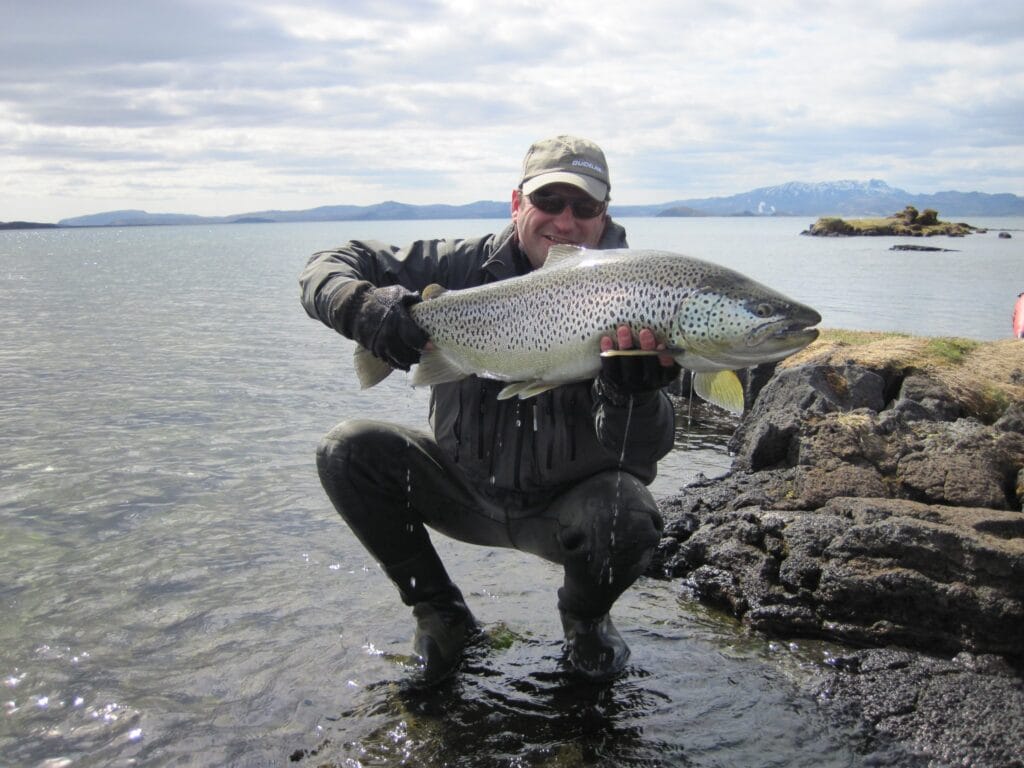
Lastly there is the giant trout from lake Thingvallavatn. There are few trout fisheries in the world quite like Thingvallavatn except perhaps Jurassic Lake in Argentina. Its giant brown trout are legendary, but catching them is about far more than simply finding big fish. The key is understanding the movement of their food and being in the right place at the right time. As spring develops, enormous trout follow the concentrations of baitfish, particularly Arctic char, around the lake’s numerous inlets and bays. The mouths of the Villingavatnsá and the rivers and streams around the ION beats are especially significant, as these inflows provide food, oxygen and subtle changes in water temperature that can draw baitfish and, consequently, the lake’s largest predators. Early in the season, streamer fishing around these areas can be exceptional, particularly when there is a little wind and colour or movement in the water. As spring progresses into May and June, however, the fishing can become much more varied, with huge trout sometimes moving into the shallows to feed on midges, buzzers and other aquatic insects. The magic of Thingvallavatn is that you can spend the morning hunting a twenty-pound trout with a large streamer and find yourself watching an equally enormous fish quietly sipping midges in the afternoon.
For more information please contact Peter McLeod or Alex Jardine or call our office on +44(0)1980 847389.