There are very few wild brown trout fisheries in the world that have had quite such an impact on us as Laxárdal in northern Iceland. Having fished this river for well over two decades, one of the most fascinating aspects has been watching the fishery evolve and, in particular, seeing the size of the trout increase over the years. A river that has always been considered an exceptional big fish destination continues to surprise us with the sheer quality and condition of its wild brown trout.
Situated above the famous salmon beats of the Laxá í Aðaldal, approximately an hour east of Akureyri, the river flows out of Lake Mývatn, one of the most biologically productive lakes in Iceland. The fertile waters of the lake provide an extraordinary food source for the trout inhabiting the river below, and it is this abundance of insect life that makes Laxárdal such a remarkable fishery.
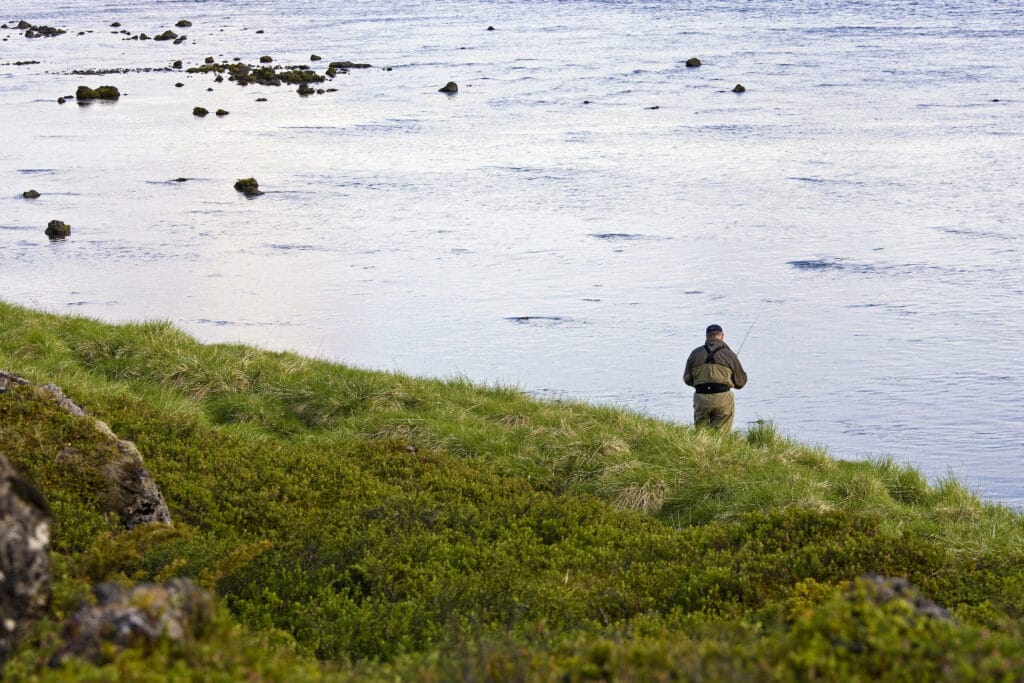
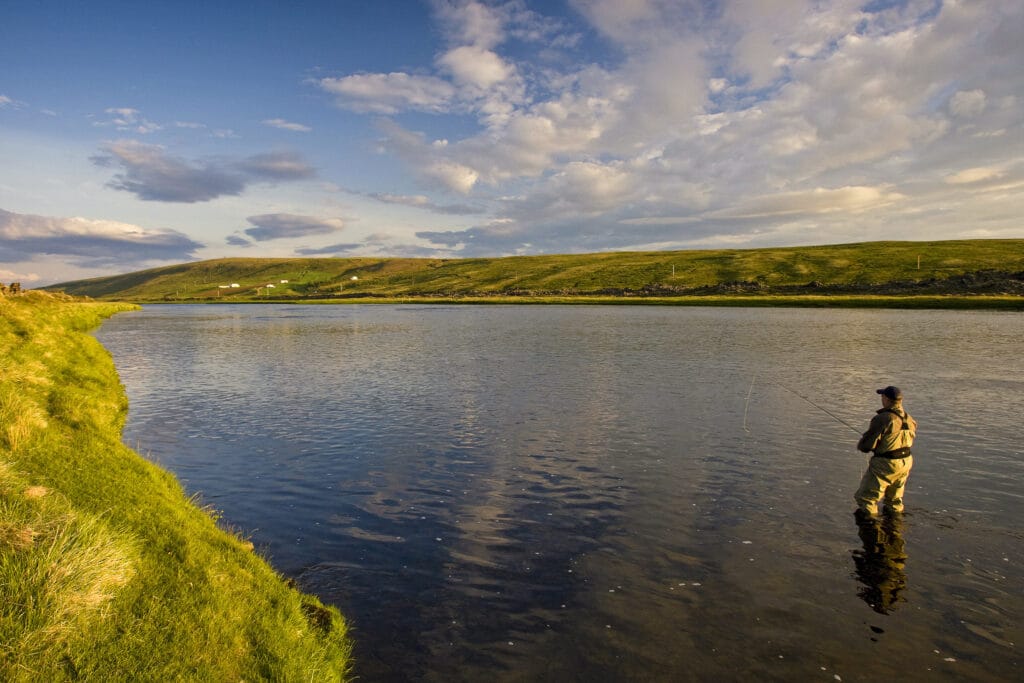
The Laxárdal beats extend for approximately 14 km, and the nature of the river is quite unlike many of the other trout rivers in Iceland. Broad and relatively shallow, the river is broken up by islands, channels and submerged lava formations that create a multitude of interesting lies. Vast expanses of seemingly featureless water conceal shelves of volcanic rock, behind which some enormous brown trout reside. The black volcanic sand that forms much of the riverbed gives the impression that the water is considerably deeper and darker than it actually is. In reality, the clarity is quite extraordinary, and anglers who approach these areas without due consideration will often see the bow wave of a large trout disappearing into the distance.
Fishing some of these wider sections is not dissimilar to wading a saltwater flat. One of my favourite aspects of fishing Laxárdal is standing in the middle of the river, scanning the surface for the subtle disturbance of a large trout feeding. A fish of six or seven pounds can create the most innocuous of rises, gently sipping tiny midges from the surface with barely a ripple. It is a wonderful contrast to what happens when the hook is set.
Perhaps what makes Laxárdal so unique is that, despite their considerable size, these trout remain predominantly insect feeders. In many other parts of the world, targeting brown trout of this calibre would involve fishing large streamers and imitating baitfish. Here, some of the largest fish in the system can be deceived with a size 20 dry fly or a tiny emerging midge pattern. The opportunity to target genuinely large wild brown trout using traditional upstream dry fly and nymph techniques is becoming increasingly rare, particularly in Europe.
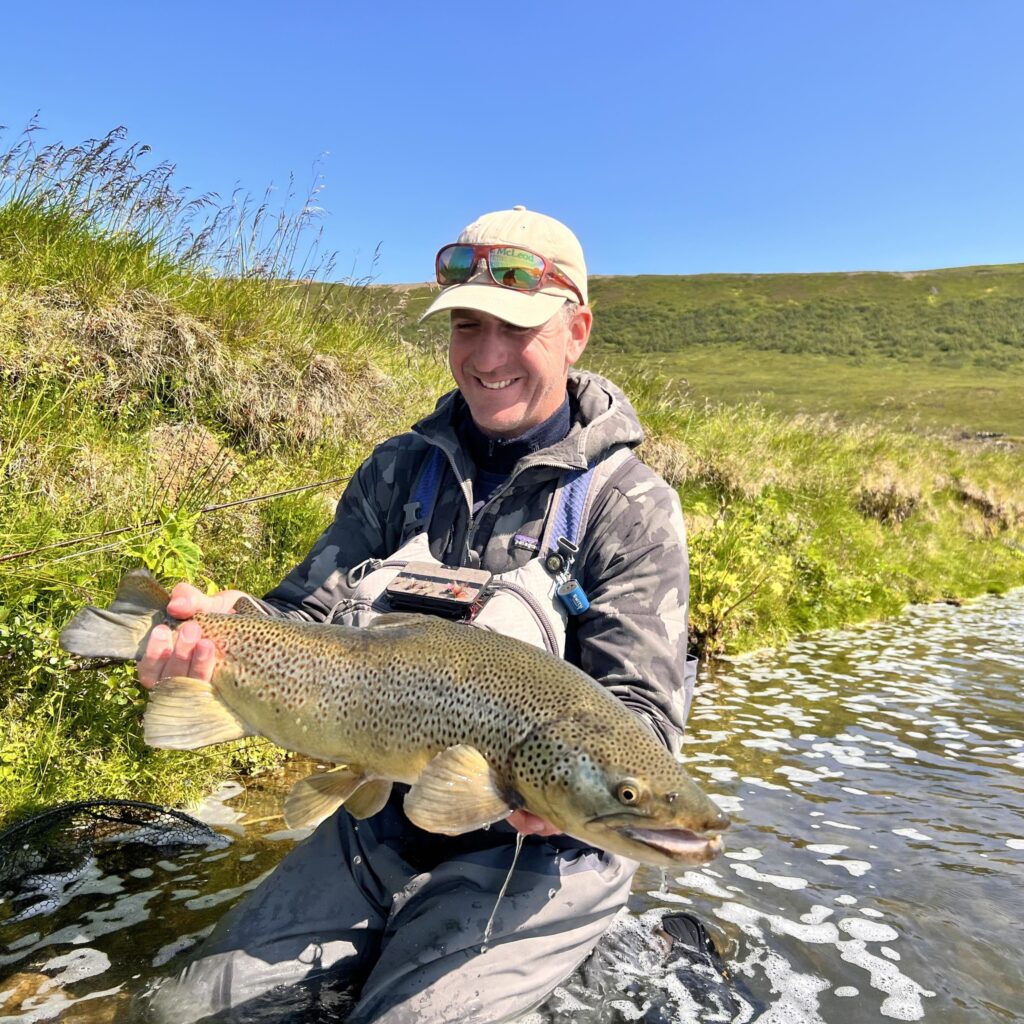
Over the years we have watched the average size of the trout increase. Fish in the four to five pound bracket were once considered the benchmark of an excellent day on Laxárdal, but increasingly we are seeing impressive numbers of fish in the five to seven pound bracket, with specimens of eight and nine pounds making appearances and the occasional fish breaking that magical double-figure barrier. What is particularly noticeable is the depth and condition of these fish. Their broad shoulders, enormous tails and wonderful golden flanks, punctuated with black and red spots, make them some of the most beautiful brown trout we encounter anywhere in the world.
The combination of an exceptionally rich food source, catch-and-release fishing and carefully managed fishing pressure has helped preserve the quality of this extraordinary wild trout population. The fact that these fish are entirely wild, rather than the product of a stocking programme, makes their increasing size all the more remarkable.
The fishing season begins in June, although late June through July and into early August is generally considered the most attractive period. The prolific midge hatches can bring vast numbers of trout to the surface, but one of the highlights of July is the emergence of the bibio, a relatively large terrestrial fly for which these trout have a particular weakness. At this time of year, fishing larger black foam patterns and hoppers can be incredibly exciting, particularly when a huge head breaks the surface and engulfs the fly. A dry fly with a small nymph suspended beneath it can also be devastatingly effective when fish are not feeding consistently on the surface.
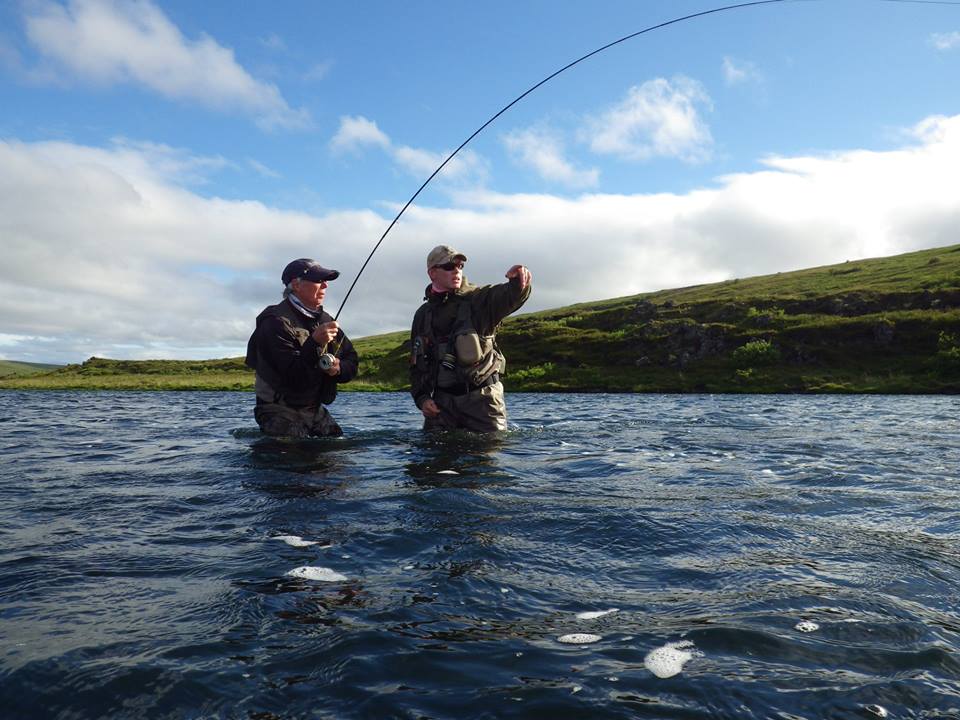
It would be remiss of us not to mention the extraordinary fighting qualities of these trout. Having spent their lives in a powerful river system, they are immensely strong, and the initial run of a large Laxárdal brown has more in common with a bonefish than a trout. They will use the current, charge downstream and weave their way through the submerged lava formations, testing both the angler and their equipment to the limit. Landing one of these fish is an achievement in itself.
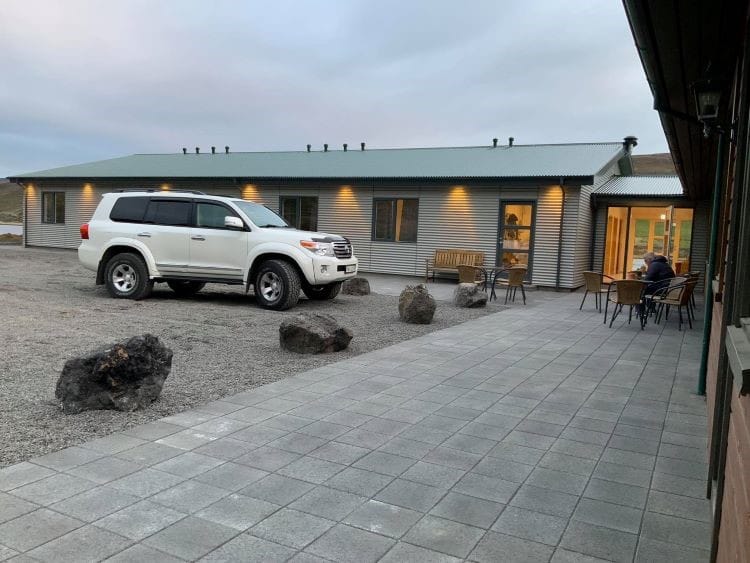
Anglers fishing Laxárdal stay at Rauðhólar Lodge, a comfortable Scandinavian-style lodge overlooking the river with 12 twin en-suite bedrooms. There is an excellent wader room, a hot tub and sauna in which to ease aching muscles after a day spent pursuing these fish. During the principal part of the season the lodge operates on a full-service basis, with an experienced team of guides whose knowledge of the river and its rather individual trout is invaluable.
Looking ahead to 2027, Laxárdal remains one of our favourite trout fishing destinations anywhere in the world. It is not necessarily an easy fishery, and there will be days when these trout test every aspect of your watercraft, presentation and patience. However, for those who relish the challenge of targeting large, entirely wild brown trout on dry flies, there are very few places that can rival it. The fact that the fish appear to be getting bigger as the years go by is yet another reason to return.
We have some prime space to offer for 2027, including:
5 – 8 July – 4 rods
8 – 11 July – 1 rod
17 – 20 July – 1 rod
20 – 23 July – 7 rods
29 July – 1 August – 1 rod
Cost
£3,480 per rod based on single occupancy, shared guide
£4,550 per rod based on single room, single guide
£800 rod share
For more details on fishing Laxárdal in 2027, please do not hesitate to contact Peter McLeod or Alex Jardine or call our office on +44(0)1980 847389.