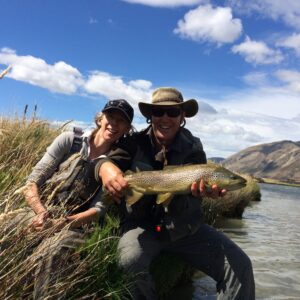
We are delighted to now be able to offer fly fishing in the Galápagos Islands. How, you might well ask, given these islands comprise one of the most protected marine environments in the world. Well, the strict controls on how the water is used, and who is allowed to operate within it results in a system that really works.
Access is limited, licensing is tightly controlled with just five boats allowed to catch and release fish, their activity closely monitored by the national park.
Bird life is in constant motion. Marine life everywhere, often in numbers that feel difficult to process. A sense that very little has ever been depleted or pressured.
Out on the water, it feels closer to what the ocean must have looked like decades, if not centuries ago.
The Striped Marlin Fishery
For many, this is where the focus begins. The Galápagos are widely regarded as one of the best places in the world to encounter striped marlin, both in terms of size and numbers.
It’s not just the numbers of fish that stand out, it’s how the fishing unfolds. It’s not served up, you still have to work for it. And that’s what makes it interesting.
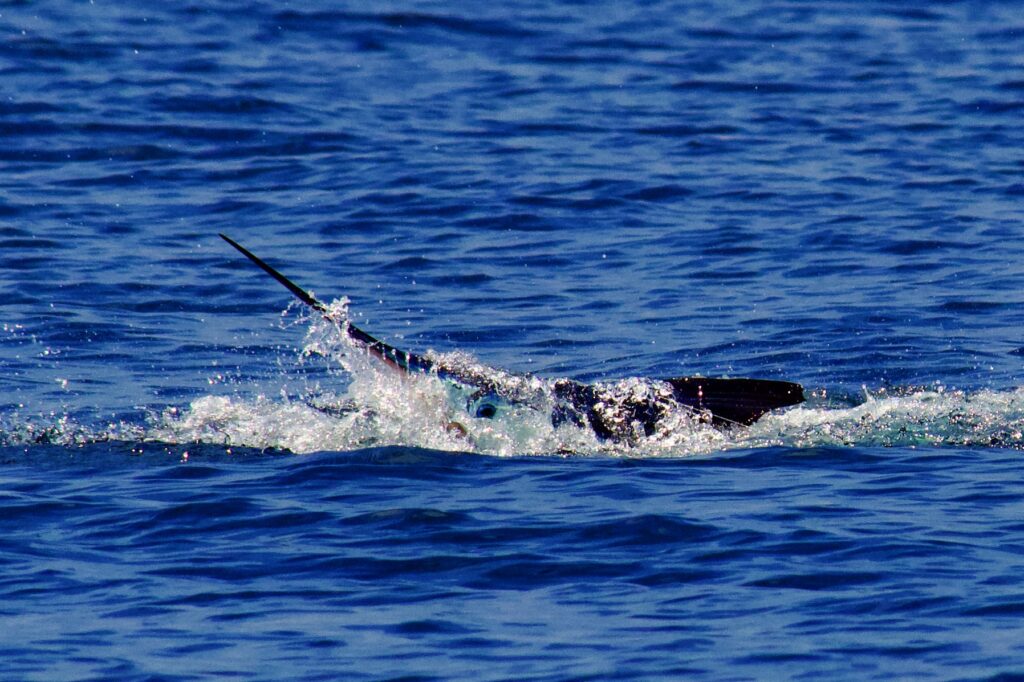
When it does come together, and a fish commits to the teaser, switches, and eats a fly properly, it’s one of the more complete experiences in fly fishing.
Blue Marlin — Two Different Approaches
Blue marlin adds another layer, but how you approach them matters.
On Fly
Opportunities exist but they are not as frequent as those with the striped marlin. When it does happen, things go up a notch. It’s more aggressive, the aerial display is isane and it’s a serious team effort to get to the leader
It changes how you think about what’s possible on a fly rod.
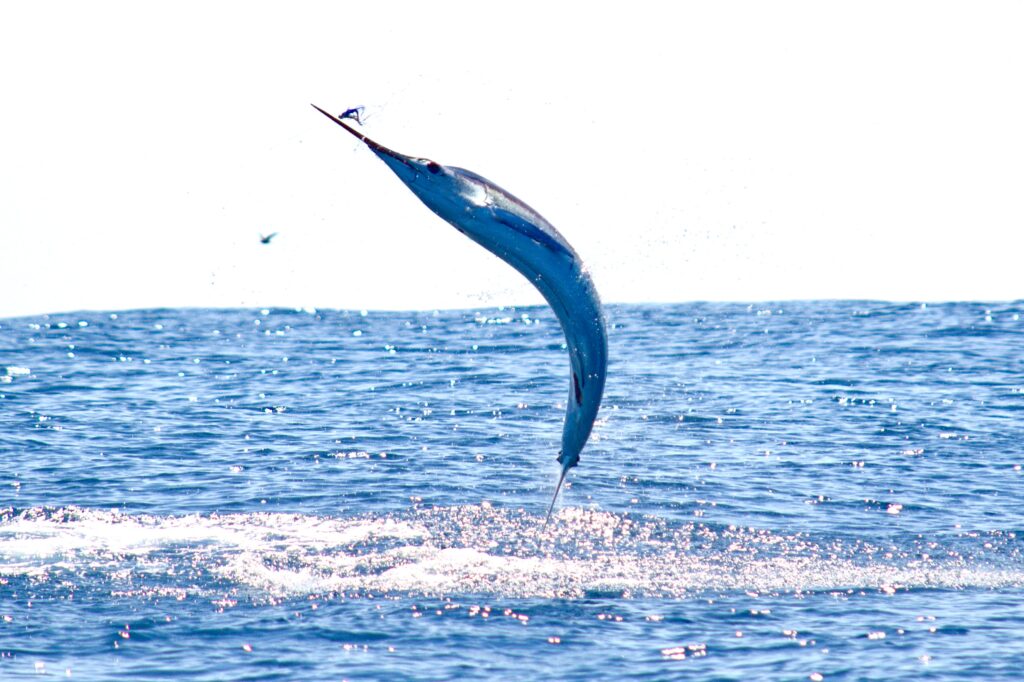
On Conventional tackle
This is where things shift.
The waters around islands like Isabela hold genuine giant blue marlin, fish well into the 500lb+ class, with larger fish encountered each season.
This is an add-on to the fly fishing, and it’s a different discipline entirely. For some, it’s a natural extension of the trip. For others, it’s a separate focus altogether.
Why It All Works Together
What makes the Galápagos stand out isn’t any one element. It’s the combination.
- A protected ecosystem that still feels intact
- The ability to move between very different areas
- Multiple ways to approach the fishing
- And a constant backdrop of wildlife and landscape
Beyond the Fishing
Even on a fishing-focused trip, it’s impossible to ignore everything else.
Sea lions sit in the harbours. There are whales, dolphins, and manta rays breaching. Birds hunt around the boat and penguins, rays, and turtles appear without warning.
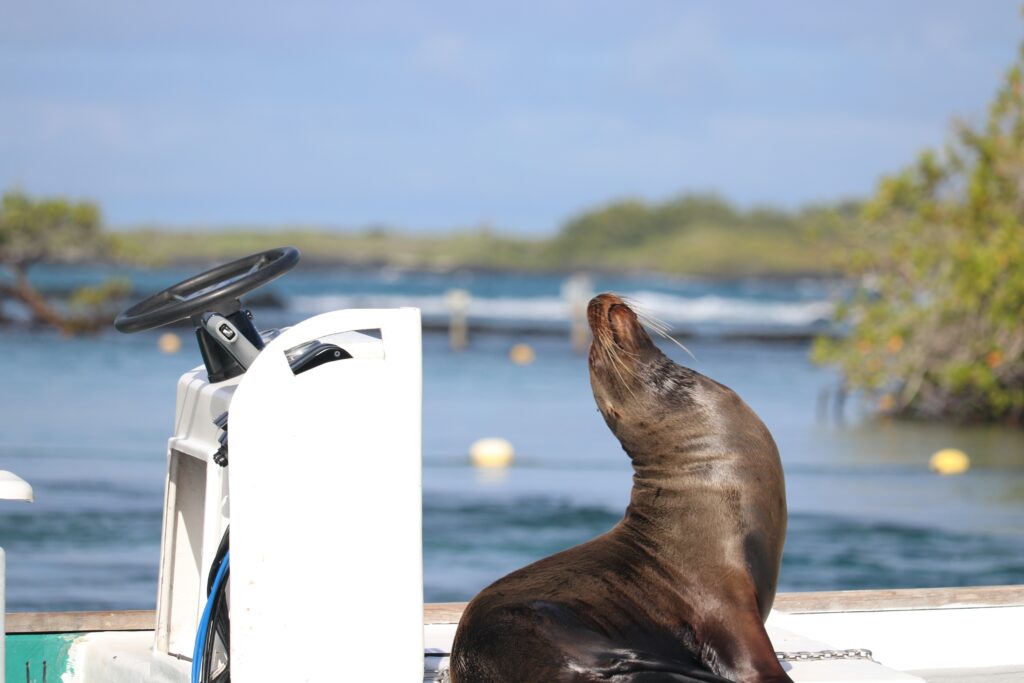
On land, there are peaceful towns, volcanic landscapes, while life definitely moves at island speed.
Who This Trip Suits
The Galápagos will suit anglers who:
- Enjoy nature
- Want a friends and/or family fishing trip
- Love billfish
- Are open to different approaches
- Are interested in the broader experience around the fishing
You can focus heavily on fly. You can mix approaches. Or you can structure it to include more time exploring the islands. We will tailor-make it for you.
Fly fishing the galápagos – in summary
The Galápagos Islands don’t fit neatly into one category. They’re not purely a fishing destination. And they’re not purely a travel destination either.
They sit somewhere in between.
And when you approach them properly, moving between islands, adapting to conditions, and understanding the different ways to fish them, they offer something difficult to replicate elsewhere.
The small number of trips we offer each year are built around doing exactly that.
If you would like more information on flyfishing in the Galápagos, please contact Charlotte Chilcott or Peter McLeod or call us in the office on +44 1980 847389