There are many exceptional Atlantic salmon rivers in Iceland, but few offer quite the complete experience of Midfjardará. Situated in north-west Iceland, approximately 2 ¾ hours drive from Reykjavík, it is often referred to as the “Queen of the Rivers”, and with good reason. What sets Midfjardará apart is not simply the number of salmon it produces, but the extraordinary variety of water contained within one river system. Extending for approximately 115 km and encompassing more than 200 named pools, the system is formed by the main Midfjardará together with three tributaries – the Austurá, Vesturá and the smaller Núpsá. With only six to ten rods fishing across five beats (early season is only six), there is an enormous amount of water available to each angler and remarkably little fishing pressure.
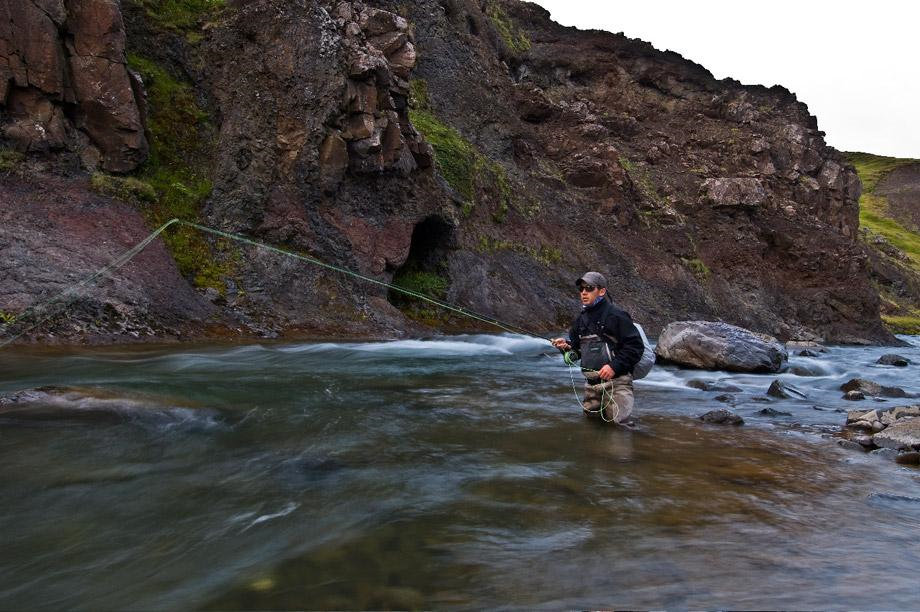
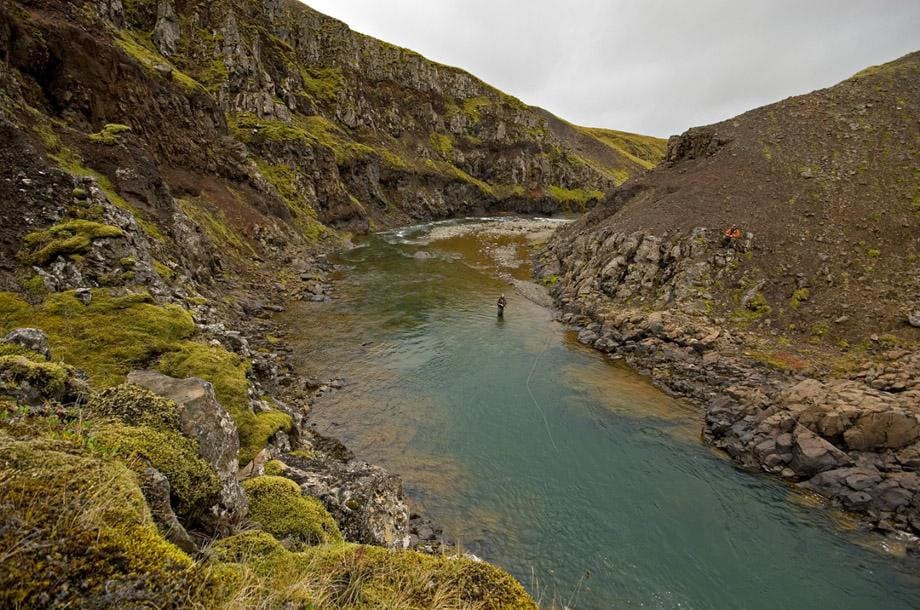
It is this variety that gives Midfjardará much of its character. The lower main river provides larger, more open pools and classic sweeping fly water, while further upstream the river breaks into increasingly intimate fishing. The Núpsá is a wonderful little tributary of pots, pockets and small pools, while the Vesturá offers beautiful clear runs, waterfalls and deeper holding pools. Perhaps most spectacular of all is the Austurá, which winds its way through a dramatic canyon where rocky pools, fast runs and small waterfalls create some of the most exciting and visually striking salmon fishing in Iceland. Within the course of a single day an angler can move from covering a broad open pool with a switch rod to fishing a tiny pocket of water with a single-handed rod, often being able to sight fish salmon before making the cast.
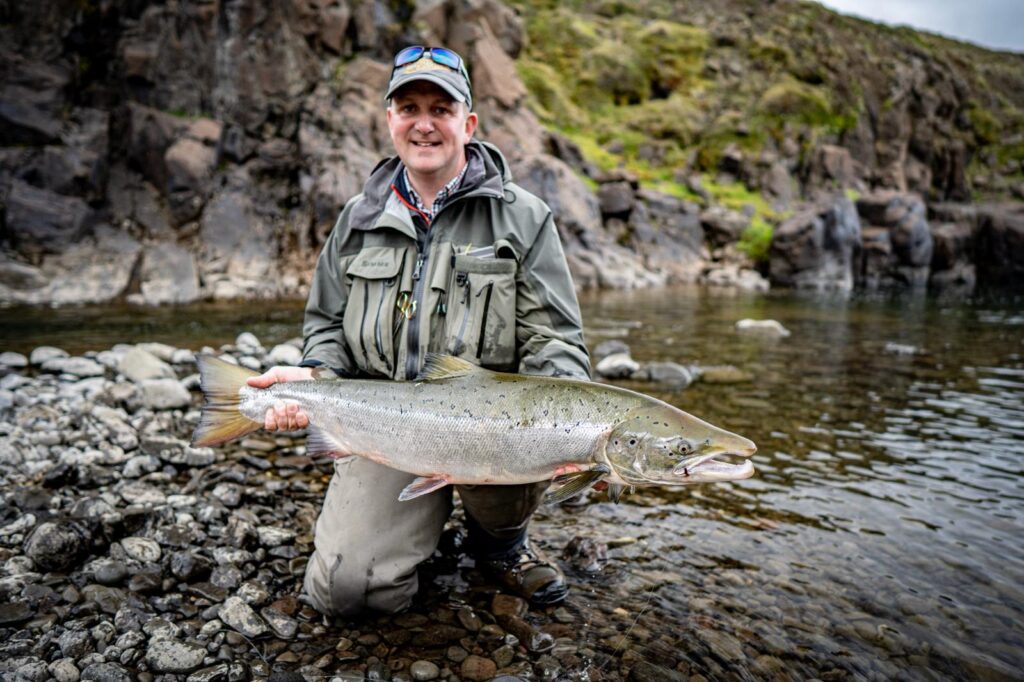
This tremendous diversity would mean little without fish, and this is another area in which Midfjardará stands apart. Some Icelandic rivers are renowned principally for numbers, while others are sought after for the chance of larger multi-sea-winter salmon. Midfjardará manages to offer an excellent combination of both. The main summer runs bring strong numbers of grilse, but throughout the season there remains the possibility of considerably larger fish, particularly during the early weeks when multi-sea-winter salmon make up an important part of the run. Fish into the high teens and beyond are encountered each season, giving every angler the feeling that the next pool could hold something rather special.
The nature of the river also makes Midfjardará wonderfully suited to modern light-line salmon fishing. Single-handed rods in the 9 to 10 ft range and 7 or 8 weights are ideal for much of the system, while light switch rods come into their own on the larger pools and lower river. Floating lines are the norm and, in suitable conditions, small flies and hitched tubes provide some exhilarating fishing. Midfjardará has a particular reputation for salmon that will rise confidently to a hitched fly skated across the surface, and watching a fish move, track and eventually take is one of the defining experiences of fishing here. As water and conditions change, traditional small Icelandic patterns, tubes and Sunray-style flies all have their place, making the fishing both varied and highly engaging.
A major part of the Midfjardará experience is the guiding. With such a vast system and so many pools, intimate knowledge of the river is invaluable. The experienced guide team understands not simply where salmon lie, but how different sections respond to changes in water height, temperature, light and the movement of fresh fish through the system. Anglers fish in pairs with their guide, travelling between pools by vehicle, and the sheer amount of water allows the guides to keep moving, resting pools and searching out fresh opportunities rather than repeatedly fishing the same water. For both experienced Icelandic fishermen and those visiting for the first time, this knowledge makes an enormous difference.
The season runs from mid-June until the latter part of September. The opening weeks are particularly exciting for those looking for larger multi-sea-winter salmon, before numbers build significantly from mid-July as the main summer runs arrive. July and August provide the greatest concentration of fish, while late August and September can offer excellent fishing as cooler temperatures and fresh water reinvigorate the river. This long season, combined with the scale of the system, means Midfjardará can offer very different fishing depending on when you visit.
The quality continues back at Laxahvammur Lodge, situated on the lower river. One of Iceland’s long-established fishing lodges, it has been extensively refurbished and provides a very comfortable base without losing the relaxed atmosphere of a traditional salmon lodge. There are ten private en-suite bedrooms, allowing a private room for each full rod, together with spacious sitting and dining areas, a drying room, verandas and an outdoor Jacuzzi. Food and service are an important part of the experience, with excellent chefs making use of Icelandic fish, seafood, lamb, meat and local produce. After a long day covering the river, the standard of accommodation, food and attentive service ensures the lodge matches the quality of the fishing.
The 2026 season provided a further reminder of just how special Midfjardará can be. The river finished on 1,780 salmon, approximately 40% ahead of the previous season, but perhaps even more impressive was an overall average weight of around 9 lb. That combination of numbers and quality is important. Midfjardará is not simply about catching large quantities of grilse; it continues to offer genuine opportunities for substantial multi-sea-winter salmon alongside excellent numbers of fresh summer fish.
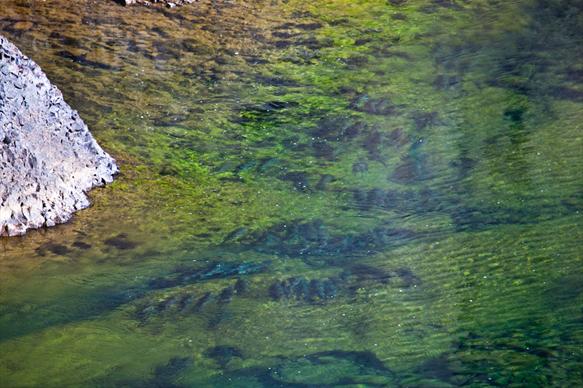
Ultimately, what makes Midfjardará different is the completeness of the experience. Few rivers combine more than 100 km of fishable water, intimate tributaries, dramatic canyon fishing, broad classic salmon pools, exceptional surface sport, strong numbers of fish and the genuine prospect of large multi-sea-winter salmon, all while being fished by no more than six to ten rods. Add an exceptionally experienced guide team and one of Iceland’s finest lodge operations and it is easy to understand why rods so rarely become available. Midfjardará remains, quite rightly, one of the most sought-after Atlantic salmon rivers in Iceland.
At this point we have a few rods to offer through the season:
18 – 21 June: SOLD – £7,650
21 – 24 June: SOLD – £7,650
6 – 9 July: SOLD – £7,650
9 – 12 July: SOLD – £7,650
12 – 15 July: SOLD – £9,290
15 – 18 July: 2 rods – £9,290
18 – 21 July: 2 rods – £10,050
21 – 24 July: 2 rods – £10,050
24 – 27 July: SOLD – £10,050
27 – 30 July: SOLD – £10,050
30 July – 2 August: SOLD – £10,050
2 – 5 August: 1 rod – £10,050
5 – 8 August: 2 rods – £10,050
11 – 14 August: SOLD – £7,650
14 – 17 August: 1 rod – £7,650
17 – 20 August: SOLD – £7,650
20 – 23 August: SOLD – £7,650
23 – 26 August: 2 rods – £6,410
These prices include transfers from Reykjavik.
For more details on fishing in Iceland please do not hesitate to contact Peter McLeod or Alex Jardine or call our office on +44(0)1980 847389.