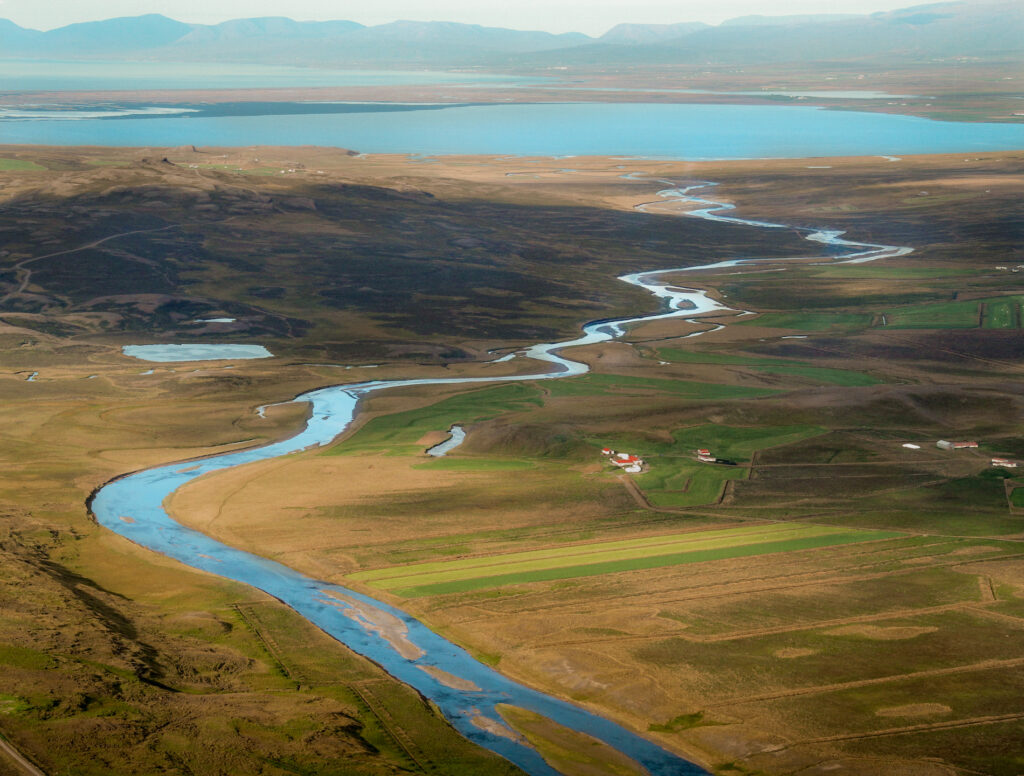
Situated in the northwest of Iceland, the Vididalsá has long been considered one of the country’s great big fish rivers. Flowing down from the highlands through the fertile valley of Vídidalur before entering the vast lake of Hóp and ultimately the sea, it has a fishing heritage dating back to the 1880s, when British anglers first began exploring the system. With over 100 named pools shared between just eight rods across four rotating beats, the Vididalsá and its principal tributary, the Fitjá, offer one of the most varied salmon fishing experiences in Iceland.
What really sets the Vididalsá apart from many of its contemporaries is the sheer diversity and scale of its water. In the upper reaches, the river carves its way through the spectacular Kolugljúfur canyon, where powerful streams and deep, rocky holding pools are framed by towering cliffs. As it emerges into the valley below, the character of the river changes dramatically, meandering through farmland with intriguing undercut banks, gravel bars and beautifully defined streams. Further downstream, the river opens out into magnificent, classic salmon pools, some extending to 150 metres in length. These are the sort of pools that simply beg to be fished with a double-handed rod, allowing anglers to settle into the rhythm of casting, swinging a fly and taking a step downstream in anticipation of that unmistakable tightening of the line.
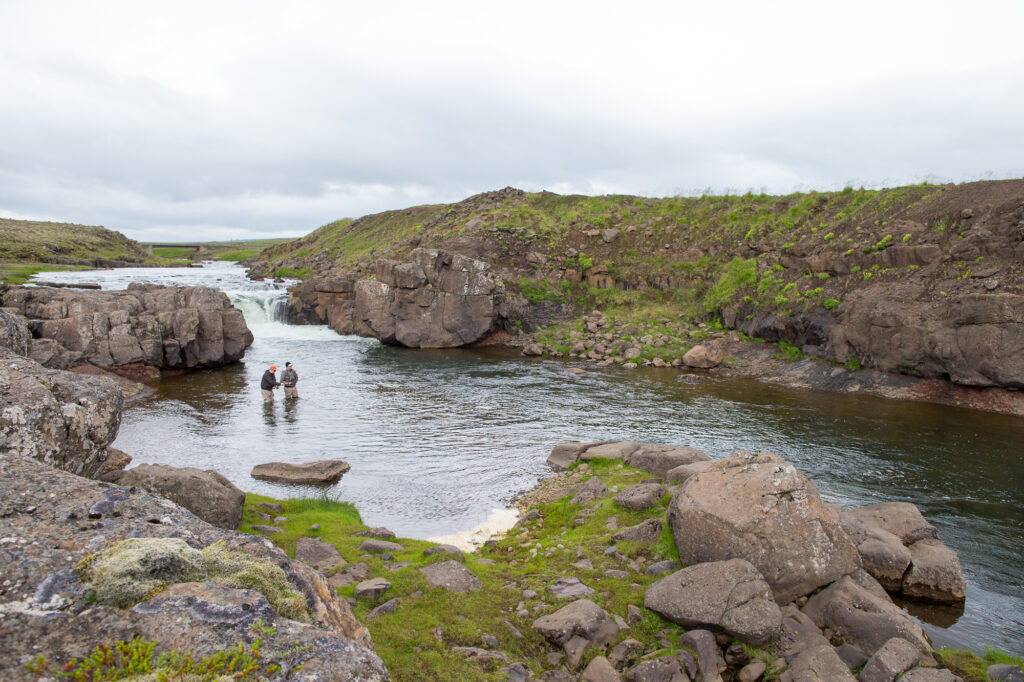
The Fitjá, the Vididalsá’s largest tributary, adds another fascinating dimension to the fishing. Almost a salmon river in its own right, it offers approximately 27 km of accessible salmon water and accounts for around a third of the system’s catches. Considerably smaller than the main river, it winds its way through secluded ravines and rocky landscapes, with some wonderfully intricate pools that lend themselves to a much more intimate style of fishing. The ability to spend the morning fishing expansive salmon pools with a double-handed rod and the afternoon searching the pockets and streams of the Fitjá with a single-handed rod is one of the great attractions of this fishery. The size of some of the salmon encountered in this relatively small tributary can be quite extraordinary.
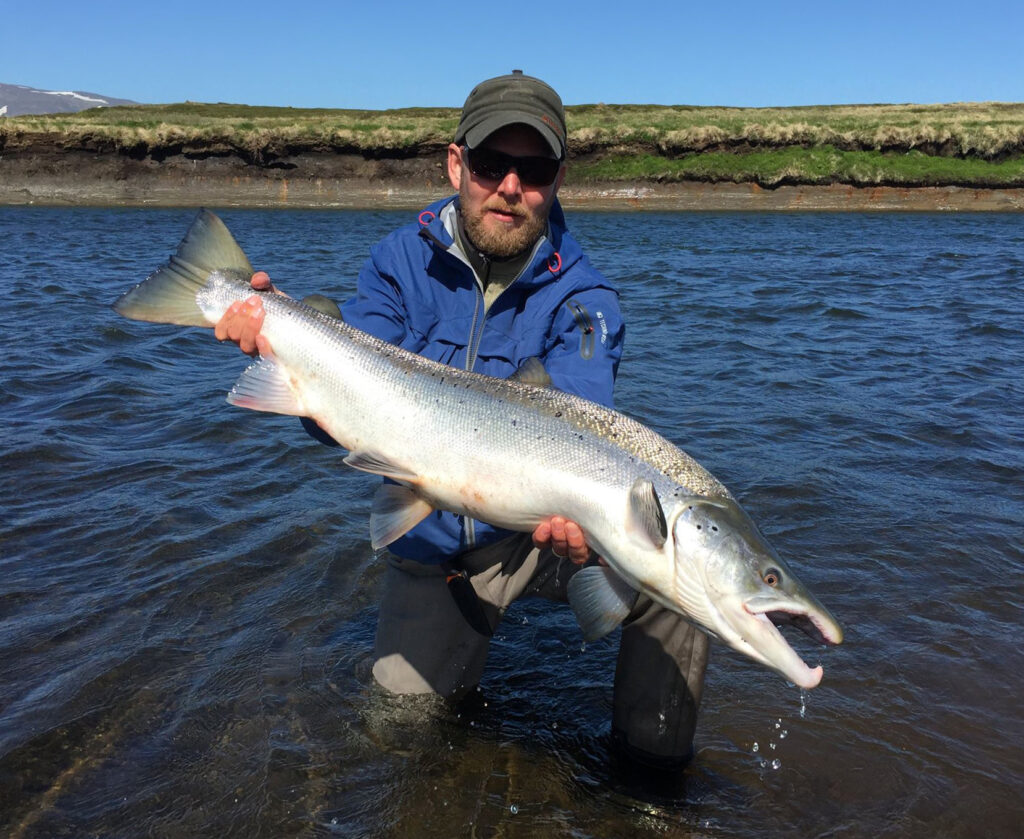
Whilst neighbouring rivers such as the Midfjarðará and Laxá á Ásum are renowned for their productivity and wonderfully visual fishing, the Vididalsá has always had a slightly different appeal. The river is particularly noted for its proportion of large multi-sea-winter salmon, with fish in excess of 20 lb are a regular feature of its catch records. There is always the tantalising prospect of encountering something considerably larger. Traditionally, the average size of salmon on the Vididalsá has been amongst the highest in Iceland, and for those anglers who would happily sacrifice a few fish in pursuit of something truly memorable, it represents a particularly exciting proposition. There is something rather special about fishing a small hitched tube across a stream in the knowledge that the fish which comes up behind it could weigh in excess of 20 lb.
Perhaps one of the most encouraging aspects of the Vididalsá in recent years has been the careful stewardship of the current leaseholders. Like many of the rivers on Iceland’s northwest coast, the Vididalsá has experienced fluctuations in its salmon runs, but there is a real commitment to restoring the river to its former glory. Through carefully controlled fishing pressure and a long-term approach to protecting its valuable wild salmon stocks, the emphasis is firmly on the future of the fishery rather than simply maximising catches in any one season. We are increasingly encouraged by the direction in which the river is heading and believe it has considerable potential to improve further over the coming years. Historically, the system has demonstrated just how productive it can be, and the prospect of stronger runs combined with its exceptional average size of fish is an exciting one.
Although the Vididalsá opens in mid-June, the northern location of the river means that some of its most attractive fishing occurs from mid-July through to mid-August. By this stage salmon are generally well distributed throughout both rivers, whilst fresh fish continue to enter the system. In addition to the salmon, the lower reaches offer some excellent fishing for sea-run Arctic char, which can reach quite exceptional sizes and provide a thoroughly enjoyable diversion.
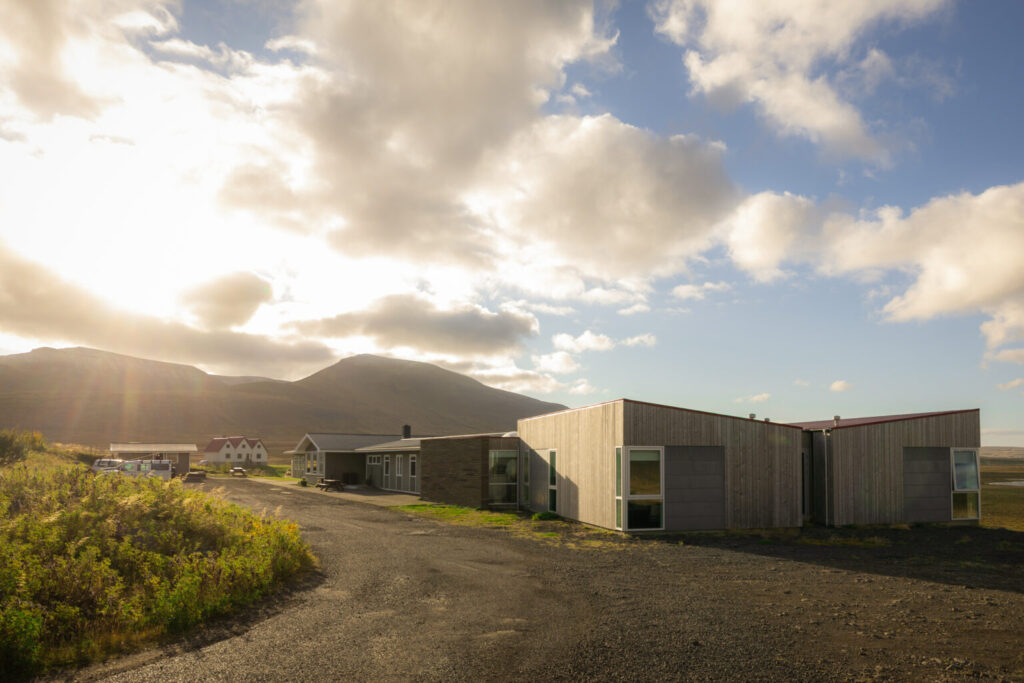
The Vididalsá lodge is extremely comfortable, offering 14 en-suite bedrooms, a spacious sitting room, excellent dining and a terrace complete with a hot tub and sauna. The lodge is fully serviced, and the experienced team of guides have an intimate knowledge of the system, particularly important on a river where understanding the individual lies and movements of the larger salmon can make such a difference.
Looking ahead to 2027, we feel the Vididalsá is a river well worth considering, particularly for those who have fished Iceland’s smaller salmon rivers and are looking for something a little different. It is a river with enormous character, a wonderful variety of fishing and, above all, that ever-present possibility that the next cast might connect with the largest salmon you have ever encountered in Iceland.
Following the excellent 2026 season, we have some attractive options available for 2027, including:
29 July – 1 August: 3 rods – £8,750 per rod (4th day available £10,900 for 4 days)
2 – 5 August: 3 rods – £8,750 per rod
5 – 8 August: 3 rods – £8,750 per rod
Rodshare £1,400
Prices including group transfer from Reykjavik
For more details on fishing in Iceland please do not hesitate to contact Peter McLeod or Alex Jardine or call our office on +44(0)1980 847389.