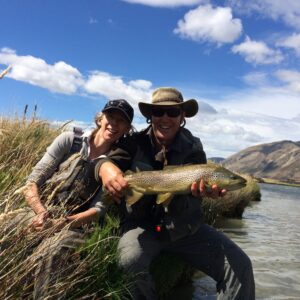
Fishing for large mouth yellowfish on the edge of the Kalahari is a true wilderness experience. Drifting down the Orange River in pursuit of this hard fighting gamefish is an unforgettable angling adventure.
The first drift of the 2026 season began with more water in the Orange than normally expected at this time of the year which made for some difficult fishing. Fish came, but this first week was as much about the journey itself — moving with the river, making camp each evening and working out what the changing conditions allowed.
Not the easiest start to a season, but a pretty honest look at a week on the Orange.
Here’s the week 1 report in full
There is far more to fly fishing the Orange River than the fishing alone, and our first guest of the season understood that from the outset. Rob arrived ready to step away from normal life, settle into the rhythm of the river and take the week as it came.
After the planning, packing, unpacking and inevitable repacking, there was a real sense of relief when the rafts finally pushed away from the bank and the first Kalahari Wilderness Drift of the season began.
We managed to find some good weather windows despite a significant cut-off low that had moved across much of South Africa.
Fresh prego rolls on the riverbank set the tone early in the trip, and from there the river began to dictate the pace.
The Kalahari Wilderness Drift is an unusual fishery in that camp moves with you, and each day finishes somewhere new further downstream. That constant movement changes the rhythm of the week.
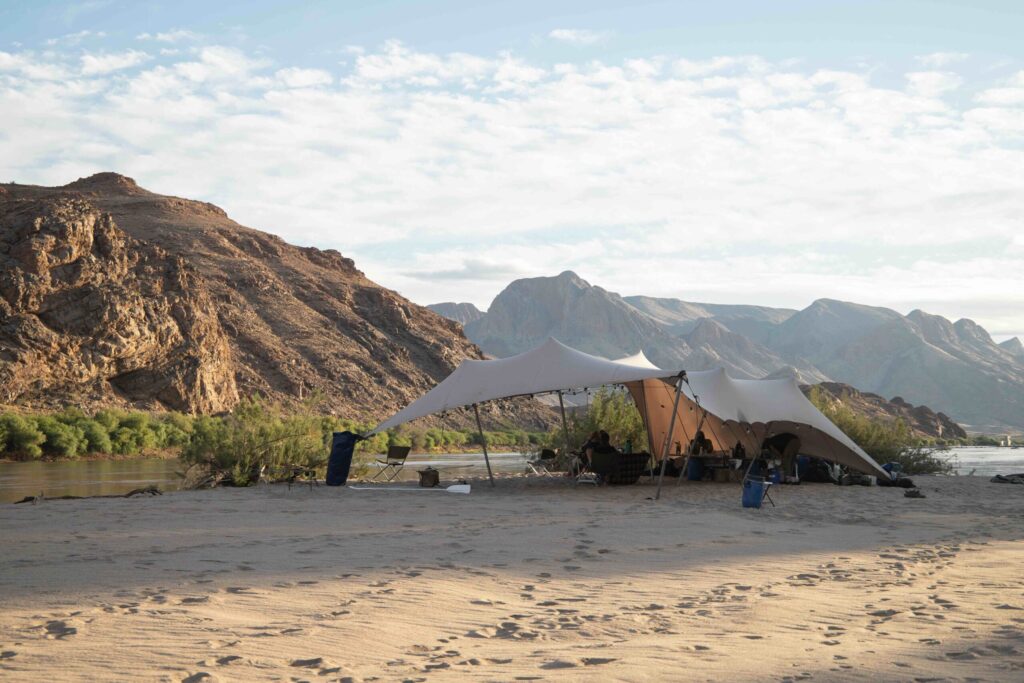
You fish the water in front of you, swim when the heat builds, stop for lunch on the bank and set camp wherever the river leaves you at the end of the day. Once the light disappears, attention turns to the fire, dinner and the stories that tend to run well into the evening.
There is very little need to manufacture anything. The river provides the structure.
The fishing itself was challenging this week.
The low had brought unsettled conditions and higher water into the system, making things considerably tougher than we would normally expect. It meant the guide team had to keep adapting throughout the week, working through different water and making the most of the opportunities that presented themselves.
Rob took it completely in his stride.
There was never a sense that the success of the week rested on a fish count. The fishing remained an important part of each day, but so did everything happening around it — moving downstream, swimming at lunch, setting up camp somewhere new and simply spending time in a remote stretch of the Kalahari.
The changing conditions also kept us thinking off the water.
Higher levels meant adapting some of our usual camp arrangements and testing a few new shelter and campsite setups along the way. Several worked well enough that they will now become part of how we approach future drifts.
With a larger team heading into this season, there has been more room to focus on each part of the trip and play to individual strengths.
Sergio once again turned out fresh bread over the campfire, while Hannah and Dumi continued refining the kitchen and camp systems.
The guide team kept working to put Rob onto fish despite the difficult conditions, while new guide Tristan settled quickly into his first drift. He helped keep things running smoothly both on the water and around camp, and negotiated his first rapids without much fuss.
These are small things individually, but together they are what allow a week in a remote environment to feel simple from a guest’s perspective.
The preparation happens in the background. The river still gets to be the river.
There was only one particularly rough night, and for the most part the sand stayed on the riverbank rather than finding its way into the bottom of a sleeping bag.
By the time we reached the end of the drift, the week had passed far quicker than expected.
Tired, sun-kissed and very content, we spent the final evening back at camp looking over the week.
Some trips are remembered for a particular fish. Others stay with you for the combination of smaller moments around it — the changing landscape, meals on the bank, the movement of the river, conversations around the fire and the people sharing it with you.
This first drift was very much the latter.
Rob embraced everything the Kalahari gave us, including the tougher conditions, and by the end of the week he had become part of the rhythm of the team.
The fish matter. The river matters. But so do the people who share it with you.
We hope our paths cross with Rob again somewhere down the line, whether on the banks of the Orange, another river or somewhere entirely different.
For now, the first drift is behind us and the Kalahari season is properly underway.
e cost excludes; International flights, gratuities and conservation levy (US$50).
For more information on fishing the Orange River please contact Alex Jardine or Charlotte Chilcott or call our office on +44(0)1980 847389.