Tigerfish Species and Biology
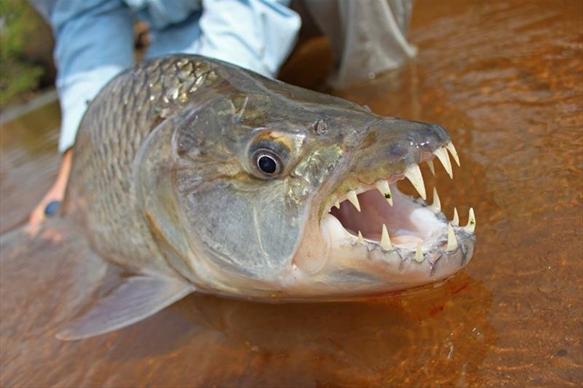
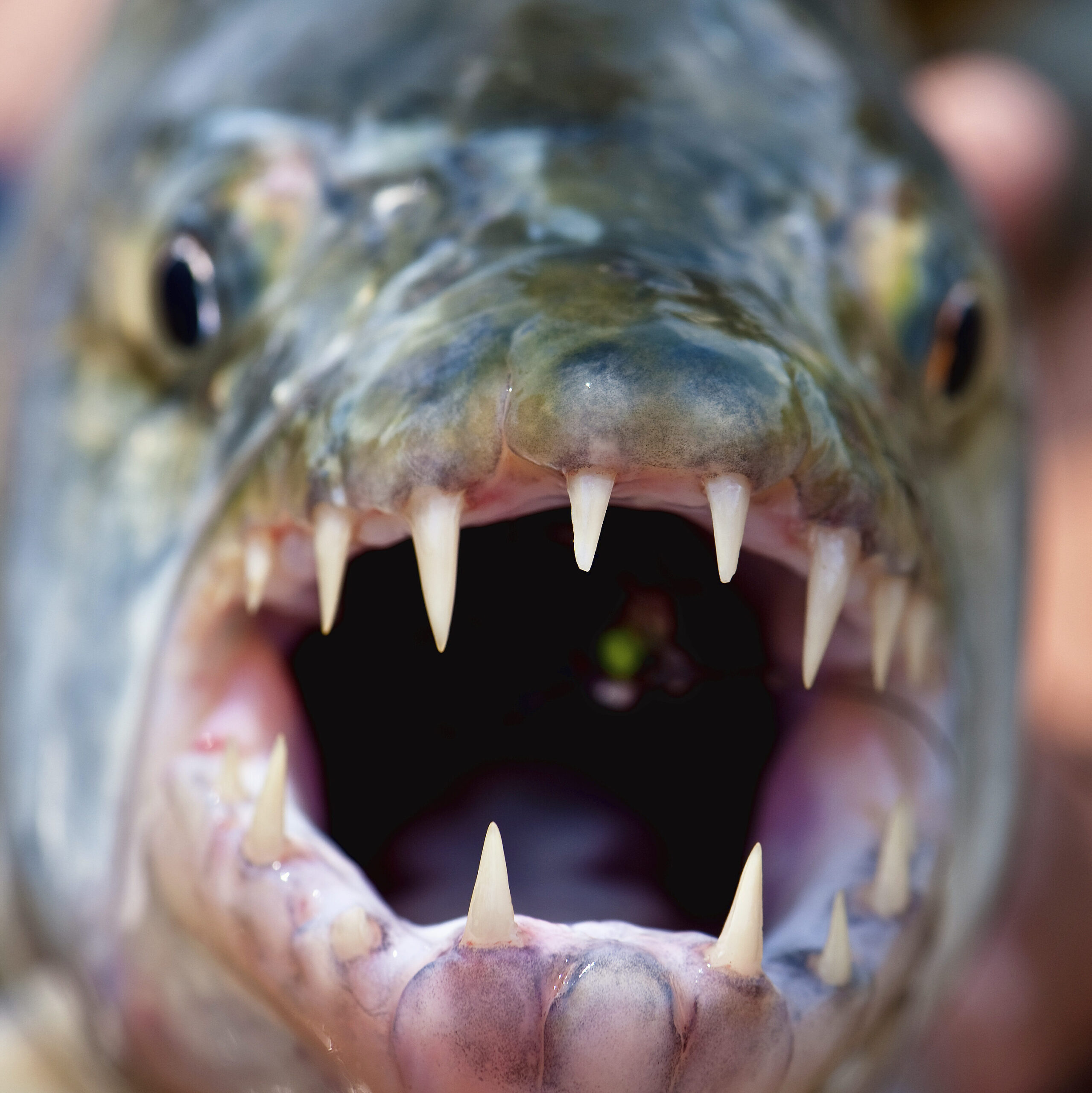
Tigerfish belong to the genus Hydrocynus, a group of fast-swimming predatory freshwater fish distributed across much of sub-Saharan Africa. They are members of the characin family, which also includes the South American piranhas, and share a similar dentition consisting of large, triangular teeth that interlock when the mouth closes. These teeth are not only highly efficient for grasping prey but also explain the necessity of wire tippets when targeting the species on fly.
The most widely encountered species for fly anglers is H.vitatus, which inhabits many southern, central and west African river systems. Further west, rivers such as those in Cameroon support species including H.brevis and H.forskahlii while the largest growing of the species H.goliath is found in the vast drainage of the Congo River basis. Further north, Tanzanian rivers are home to large growing H.tanzaniae.
While they all have very different attributes and habits, they also have much in common. Tigerfish are often perceived as relatively straightforward quarry due to their aggressive nature and willingness to attack fast-moving flies. In practice landing ratios can be surprisingly low and anglers unfamiliar with the species frequently encounter avoidable problems.
Lifting the rod
Perhaps the most common mistake is setting the hook with a traditional trout-style lift of the rod. Tigerfish possess extremely hard, bony mouths and usually attack flies at speed. A rod lift often pulls the fly away before the hook has been able to make purchase. The correct approach is a (very) firm strip-strike, driving the hook point home while keeping the rod low and pointed towards the fish. Only once tension is fully established should the rod be raised.
Retrieving too slowly
Tigerfish are built for speed and are accustomed to chasing fleeing baitfish. Flies retrieved slowly often fail to provoke a committed strike. Rapid, continuous strips with occasional pauses or erratic changes in speed tend to produce the most consistent responses.
Stopping the retrieve too early
A large proportion of tigerfish strikes occur close to the boat or riverbank so continue the retrieve right to the end of the before lifting the fly as tigerfish will often follow the fly for several metres before committing to the attack.
Having slack line
Once hooked, tigerfish frequently aerialise in an attempt to dislodge the fly. These jumps are responsible for a large proportion of lost fish. Allowing slack line during these moments will often result in the hook shaking free. Keep the rod low and maintain constant pressure while stripping line quickly to recover slack whenever the fish becomes airborne.
Keep contact with the fish
Play your fish on the line as long as you can, rather than trying to get your line onto your reel. Maintaining contact is crucial and your hook will, quite often, have a precarious purchase and any slack line will see it heading off back into the deep.
Using leaders that are too long
Long tapered leaders generally offer little advantage and can reduce casting efficiency with large flies as they can make it more difficult to large streamers. Short, robust leaders terminating in a short section of wire bite tippet work best.
Not using wire
Tigerfish teeth are designed to shear through fish scales and bone, and they will cut conventional mono or fluoro like a hot knife through butter. A short section of knottable wire is standard practice across most tigerfish fisheries.
For more information about any of our African destinations or safari trips please contact Charlotte Chilcott. Alternatively call the office on +44(0)1980 847389.
More about the author; Charlotte Chilcott.