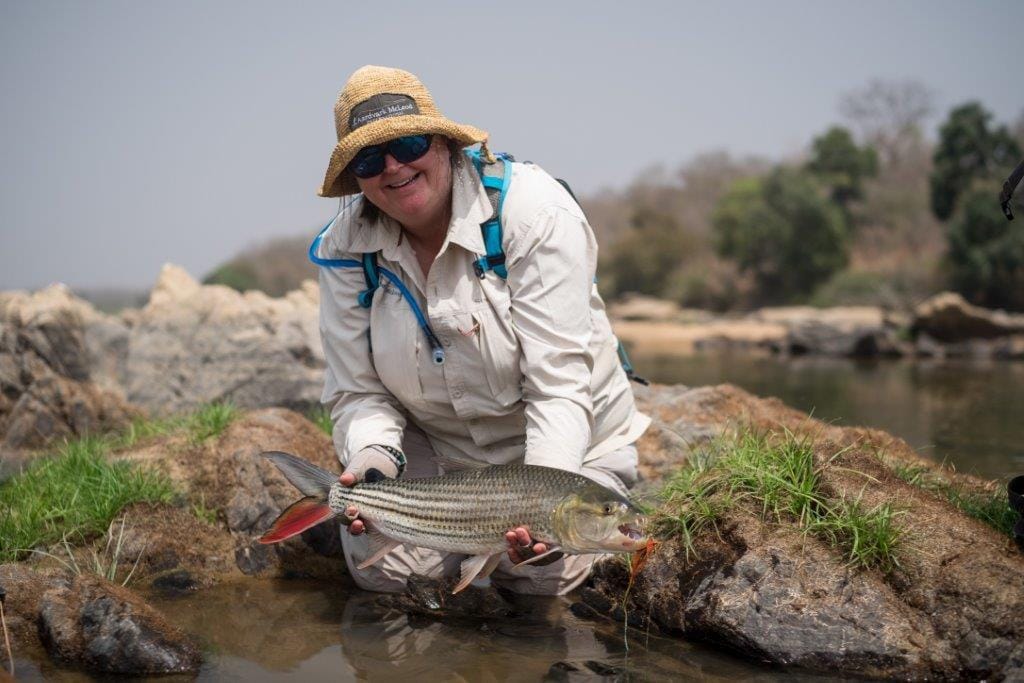
Tigerfish comprise five currently recognized species within the genus Hydrocynus, each occupying distinct African geographical areas while sharing the same fundamental design. Freshwater apex predators, they have laterally compressed bodies, ossified heads, and interlocking, surgically sharp teeth. Replacement teeth develop in series enabling them to maintain their razor sharp cutting efficiency. Its not unusual to land fish that are in the process of replacing their teeth.
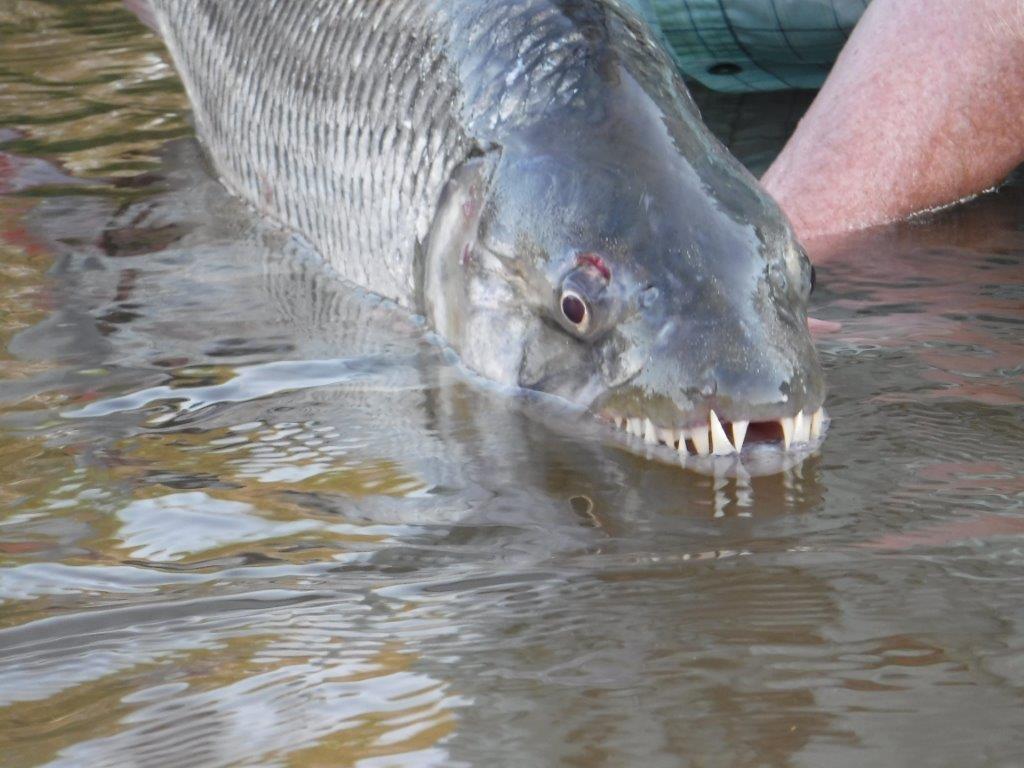
The most broadly distributed is Hydrocynus vittatus, present across southern and east African river systems. They characterized by a moderate maximum size, bold lateral striping, and strong association with main-channel current. West Africa’s Hydrocynus forskahlii occupies Sahelian and Sudanian basins, they are generally small but are highly fecund, exploiting seasonal floodplains. Central Africa supports Hydrocynus goliath, endemic to the Congo Basin and brought to TV screens by Jeremy Wade. It is notable for its extreme body mass, enlarged cranial proportions, and correspondingly heavy dentition. The rarer Hydrocynus brevis occurs in parts of West and Central Africa and is distinguished by a more compact body form and shorter head profile, while Hydrocynus tanzaniae is geographically restricted to Tanzanian river systems, representing a localized lineage adapted to coastal and interior drainages.
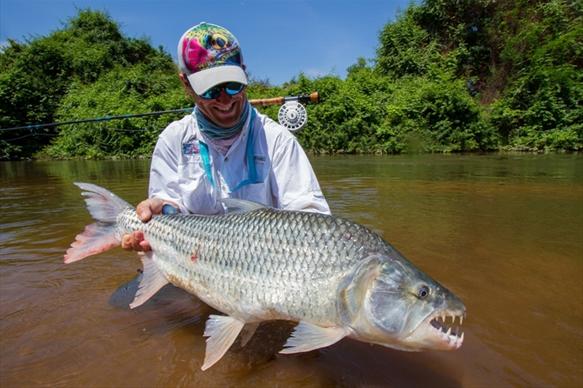
Across the genus, tigerfish synchronize their life strategy with hydrological cycles. They spawn seasonally, typically coinciding with rising water levels. That disperses larvae and juveniles into the food rich and protected margins and floodplains before the receding waters concentrate the baitfish and juveniles back into the main channels.
In Tanzania, structure is more frequently wood, with undercut sandbanks, reed margins and soft inside bends. The fish are less tied here to hydraulics and more to baitfish concentrations along the edges. Here blind casting to structure and undercuts will reap rewards. Further south and west, the tigerfish are more likely to hold on the downstream faces of sandbars, rock deflections as well as within and by structure. Here disciplined seam fishing is more applicable and much more efficient.
Regardless of the what and the where, tigerfish compress violence into split seconds. The take is not tentative; it is a high-speed intercept followed by immediate directional change and sustained acceleration. Their power comes from their body design and use of currents. They have dense musculature, a rigid frame, and a deeply forked tail built for bursts of speed. Once hooked, they convert flow into leverage, shaking with a lateral torque that tests knots, wire, and angler discipline. Jumps are common, headshakes are abrupt, and any slack is terminal. The excitement is technical rather than theatrical—anticipation during the fast retrieve, impact at the eat, and controlled pressure through the chaos. Success is measured in tension maintained, angles managed, and hardware that survives the encounter.
Target tigerfish on fly with Aardvark McLeod in Tanzania, Zamiba, Zimbabwe, Mozambique and Cameroon.
To discuss when and where to fish for tigerfish, please contact Charlotte Chilcott or call the office on +44 1980 847389.
About the author: Charlotte Chilcott