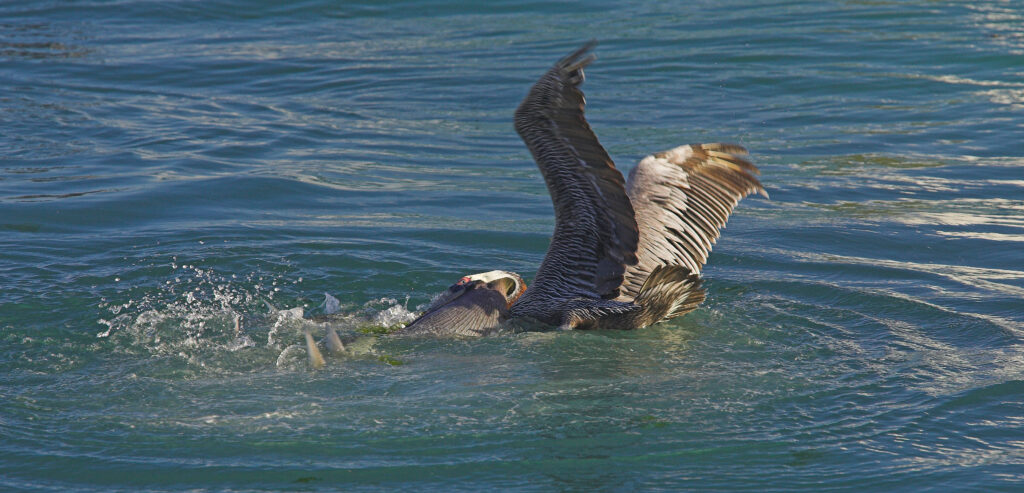
“A pelican lumbers off its perch on the side of a boat, taking to the air like some old flying boat and reaching the apex of its climb, wheels around before extending its neck and crashing into the water in a cloud of spray. It bobs to the surface, shaking its head as it tries to close its beak, but is unable — a silver ghost has slid in to steal its hard-won booty. A flash of silver from its forked tail and the bonefish slides back into the turquoise water to find another unwilling victim.”
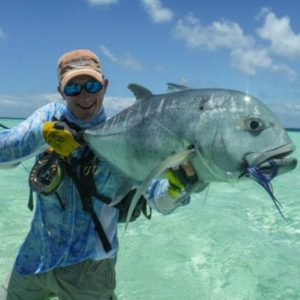
When I think back to the first time I visited Los Roques in Venezuela, this is one of the memories that catches in my mind. Of all the saltwater fisheries I have journeyed to over the years, Los Roques stands out as being truly unique. There is no other place in the world where you will see this symbiotic relationship between pelicans and bonefish. It remains as unique as the bird-eating GTs of Farquhar Atoll or the Palolo worm-eating tarpon of Florida.
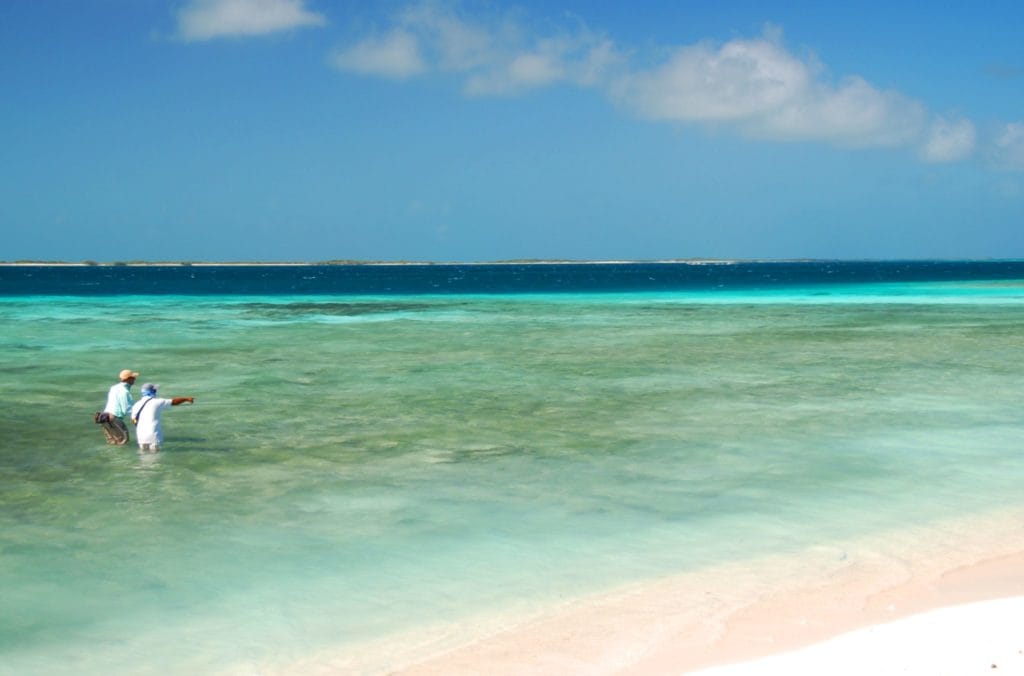
Los Roques is still one of the very best destinations in the world to target tailing bonefish while wading on hard flats, and where the bonefish carry a high average size. The fishery has always been one of the top three flats destinations in the world and, for me, comes a close second after the Seychelles. Why? The majority of the fishing that you do there is on your feet, wading over the pancake flats or along the beaches targeting individual bonefish, and some of those specimens are large. These bonefish, that feed on minnows, are aggressive and will hunt down their prey, unlike the normal reputation of the ghost of the flats.
In the mid-2000s there were three full-time fishing operations covering the 2,250 km² area of the Los Roques Archipelago. Over the last decade the difficulties the country has faced has reduced this to only one, and the top guides from all three are now working together. Many of these guides have been fishing Los Roques for 15–20 years (many of whom I fished with when we were all much younger!) and know every nook and cranny of the fishery. Their knowledge and enthusiasm are unbounded.
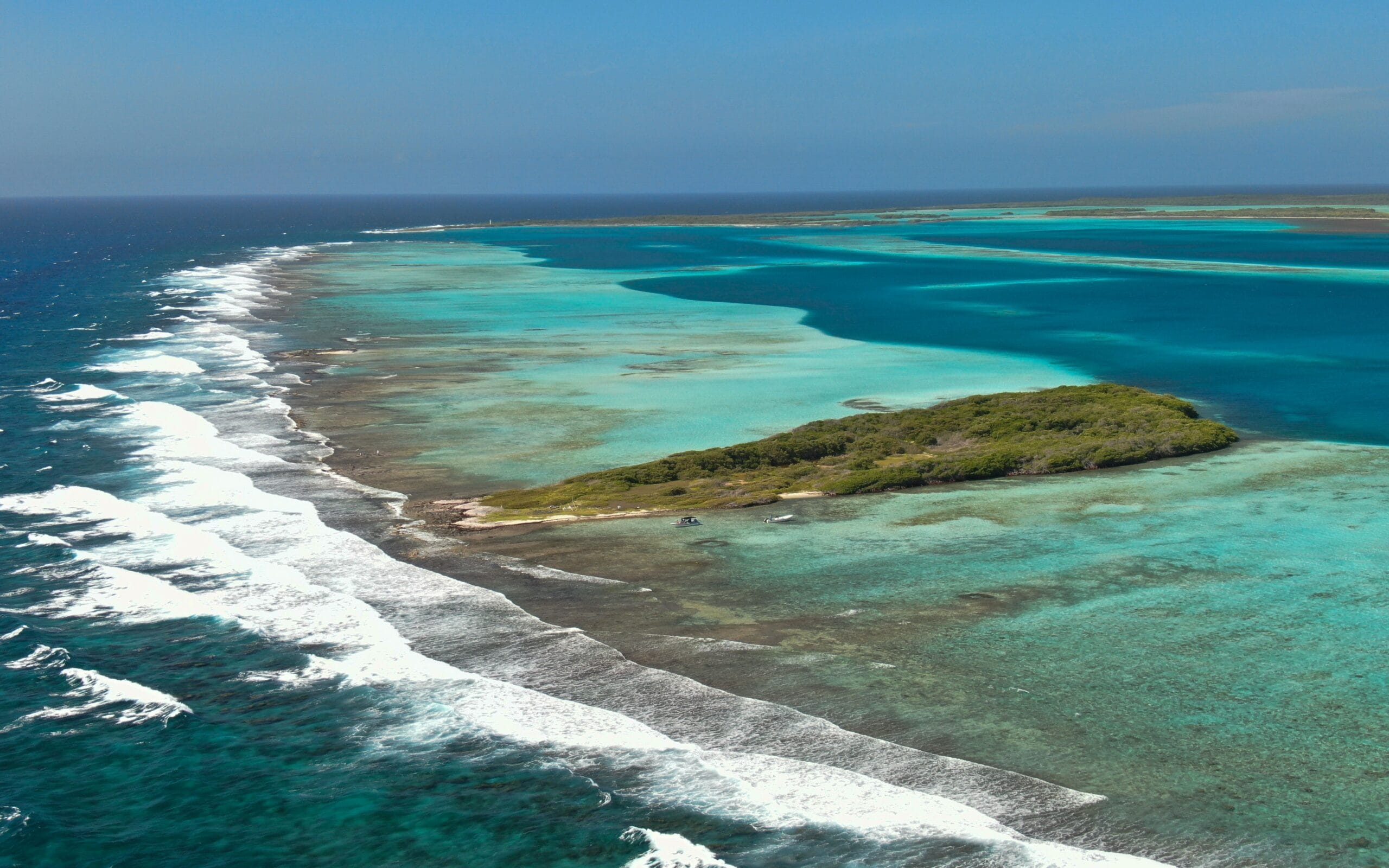
Los Roques is particularly famous for its pancake flats. These half-acre to 3-acre areas of raised coral covered in turtle grass are the perfect environment to hunt tailing fish on. Fish come out of the deeper water onto the edges of these flats hunting crustaceans and sometimes end up with their backs out of the water as they nose through the turtle grass. They are extremely exciting to target as often stealth and careful presentation are required in the extremely skinny water. The long beaches also make the ideal spot to target bonefish cruising the margins hunting minnows; the white lines in the dark bands of minnows giving away their position.
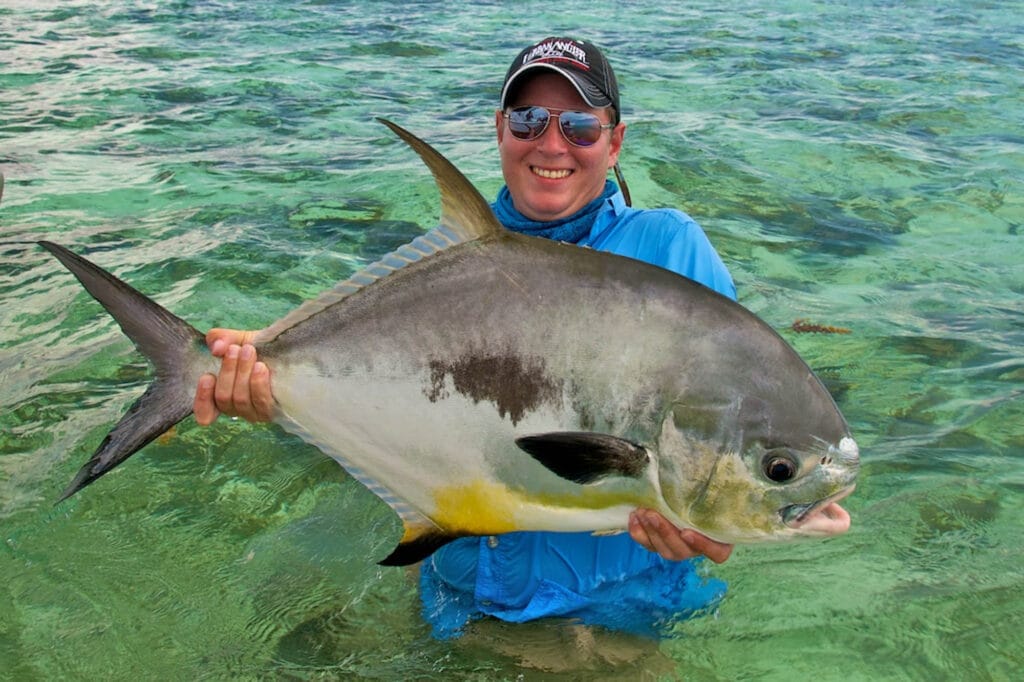
The other aspect of the fishery that has developed hugely over the last decade is the ability to target different species. Although first and foremost a world-class bonefishery, Los Roques also has some very large permit, a large number of resident tarpon, snook, barracuda, triggerfish and parrotfish. There is no doubting the fishery; it has only improved over time as more has been learned and the pressure from fishermen disappeared after US clients could no longer go there and then Covid. Many of the flats went months having never even seen a fisherman. Clients that have ventured there report 60–90 bonefish weeks interlaced with a mixture of species and an outstanding fishing experience.
The first question I am normally asked is: “Is it safe and why is there a Foreign Office travel warning on the country?” This Foreign Office travel warning has been in place for over a decade and relates predominantly to the interior and border areas with Colombia. The travel warning negates normal travel insurance, so for a short period of time it was not possible to send people there — not because getting to Los Roques was not deemed safe, but because we don’t allow anyone to travel without medical evacuation insurance. Roughly eight years ago this changed, with UK companies creating insurance policies specifically for those travelling into areas with Foreign Office travel warnings.
When flying to Venezuela, even though their airport is called Caracas, it is actually right on the coast in La Guaira. Formerly a resort area where some of the top marlin boats were based, La Guaira is an hour’s drive from Caracas and on the other side of a mountain range. On arrival clients are met as they come through immigration and whisked away to a hotel 15 minutes away. They then are transferred back in the morning to the domestic airport, which is on the same runway as the international, before boarding a four-engine Dash 7 aircraft for the short 45-minute flight to Los Roques. On arrival you step out onto the sandy streets of what could be any Caribbean island, where an extraordinary fishery awaits you.
Forward the clock to the present day and, after current events that recently occurred, we are already seeing the effects of the stabilisation of the country and are very excited about the future. Flights have recommenced from a number of carriers and life has already returned to normal there. Many of our regular clients that have been travelling to this jewel for a decade or more are already jumping on planes to get back there. With the world forever becoming a smaller place, pressure increasing on existing fisheries and disruption occurring closer to home, it might just be time to head back to the flats of Los Roques.
For more information on Los Roques please contact Peter McLeod or Alex Jardine or call our office on +44(0)1980 847389.