
Peacock bass occupy a singular place in the world of fly fishing. They are not subtle, not delicate, and never incidental. For many anglers, the first encounter with a peacock bass is a shock to the system: a fish that hits like a hammer, fights with relentless violence, and refuses to yield even at the boat. If trout shaped the refinement of fly fishing, peacock bass represent its raw, untamed frontier.
Their domain is the vast tropical artery of South America. Peacock bass thrive in warm, tannin-stained rivers, flooded forests, oxbow lakes, and lagoons where structure defines everything. Submerged timber, fallen trees, weed edges, and current seams become ambush points in a dynamic ecosystem that shifts with the seasons. Fly fishing here is immersive and physical: long days under equatorial sun, constant casting, and the ever-present sense that something large and aggressive is watching from the shadows.
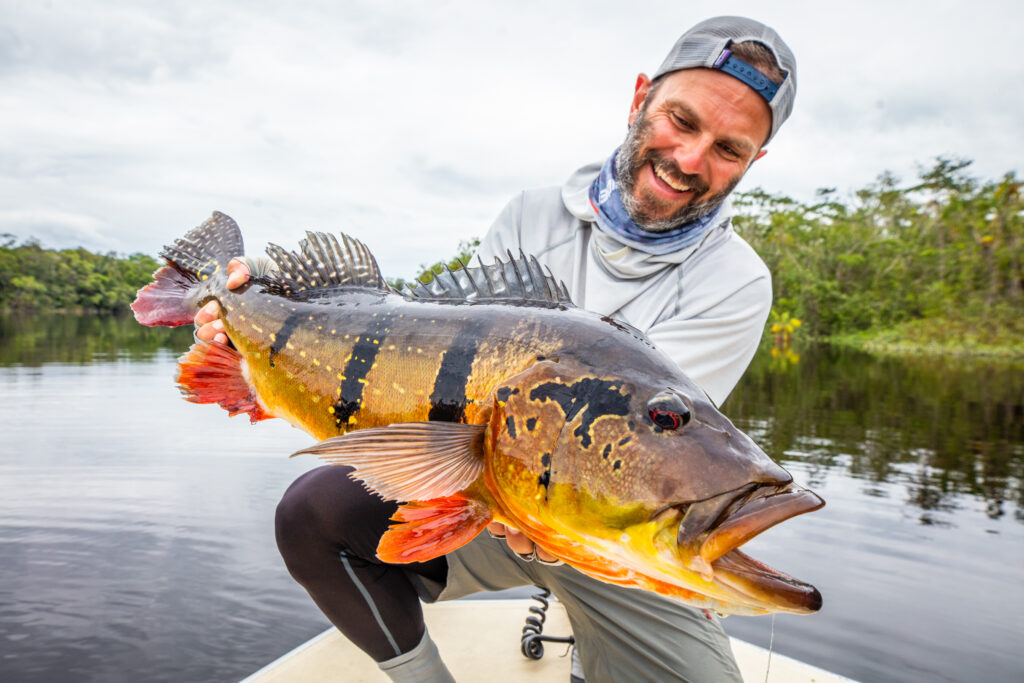
Peacock bass are visual predators, built for explosive speed and domination. Their feeding behaviour revolves around ambush and territorial aggression rather than finesse. Large baitfish patterns, surface poppers, and flashy streamers provoke savage strikes, often within metres of the rod tip. Accuracy matters more than delicacy, and success comes from understanding structure, timing, and how these fish use water during rising and falling river levels.
The largest and most revered of all peacock bass is Cichla temensis, commonly known as the açu. Found throughout the Rio Negro system and other blackwater rivers of the central Amazon, açu are the giants of the genus, capable of exceeding 20 pounds. They are distinguished by their elongated bodies and dramatic colour change, shifting from pale silver to deep, barred patterns as water levels drop. Açu are apex predators and the ultimate fly-rod test, demanding heavy tackle, precise presentations, and endurance from angler and guide alike.
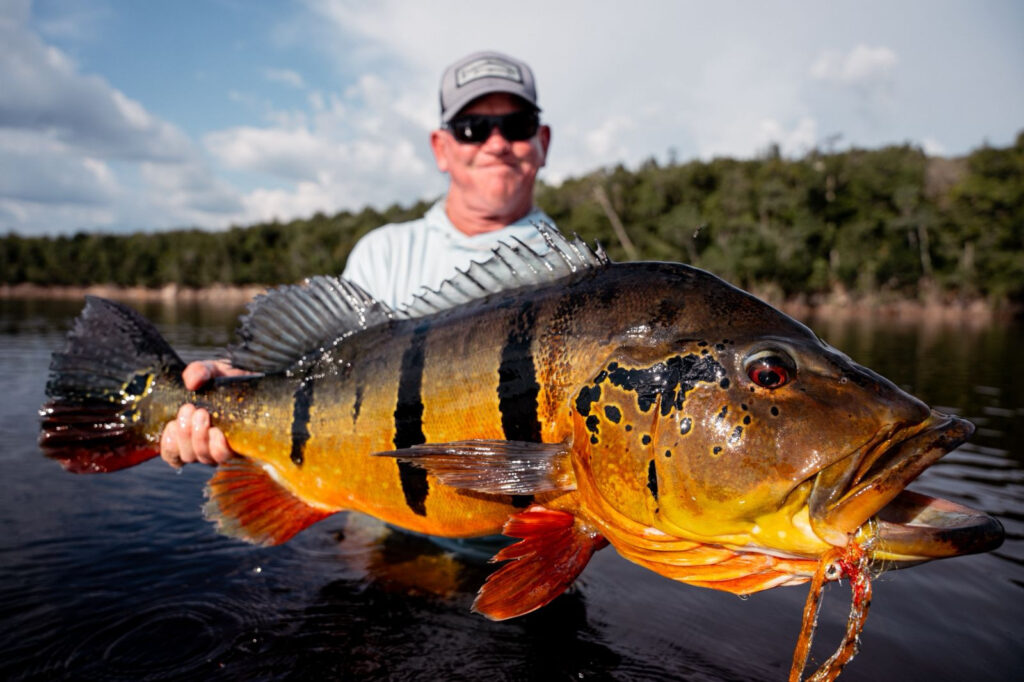
More widespread but no less aggressive is the butterfly peacock bass, Cichla ocellaris. Slightly smaller on average, butterflies are famously volatile and territorial, often attacking flies multiple times in a single retrieve. Their vivid green, gold, and orange markings, along with a pronounced ocellus on the tail, make them one of the most recognisable and photogenic freshwater gamefish in the world.
Cichla melaniae is a striking peacock bass species native to the Rio Xingu and its tributaries. They thrive in blackwater environments, often ambushing prey along submerged roots and floating vegetation. For fly anglers, these fish offer a thrilling combination of cunning and power — they may refuse a fly for long periods before detonating with explosive strikes that test both line and nerve.
Cichla orinocensis, as the name suggests, is indigenous to the Orinoco Basin, spanning Venezuela and parts of Colombia, as well as the Rio Negro in Brazil. Medium to large in size, orinocensis is renowned for its vivid green-gold coloration and striking ocelli, making it as photogenic as it is combative. These fish favour structured river channels, flooded forests, and calm backwaters where territorial males dominate prime hunting grounds.
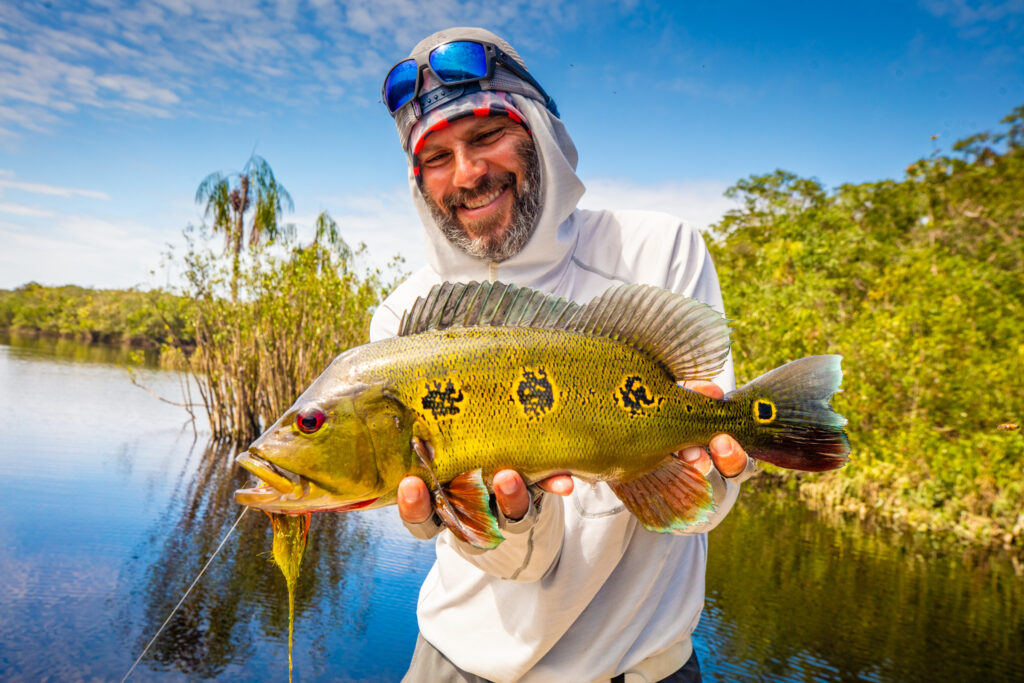
Across all strains, peacock bass inspire a particular kind of obsession. They are intelligent, social fish, often hunting in pairs or small groups, and once fired up they show no hesitation in attacking a fly that invades their territory. Every take is unmistakable. Every fight is chaotic. Landing one feels earned, not through subtlety, but through commitment.
For anglers seeking fly fishing at its most visceral, peacock bass are unmatched. They embody the scale, heat, and intensity of South America’s great rivers, offering an experience that is as much about environment as species. To pursue peacock bass is to embrace a different rhythm of fly fishing — louder, harder, and utterly unforgettable.
Peacock bass are native to the Amazon and Orinoco basins, and can be caught in Brazil, Colombia, and Guyana.
To discuss peacock bass fishing ideas, please contact Olly Thompson or Peter McLeod or call the office on +44 1980 847389.
About the author: Alistair Routledge