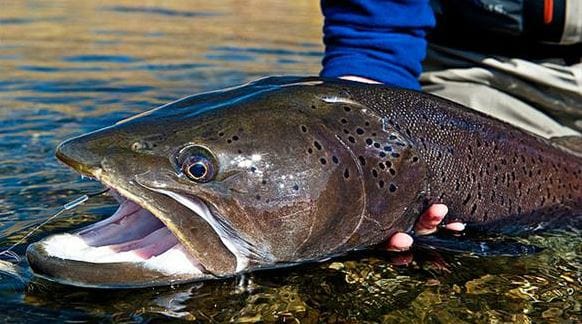
The largest salmonid in the world, Taimen are capable of reaching notable sizes with fish up to 62 cm having been recorded. They can be very long lived and while growth is fast whilst young, growth slows as they age. It is not however, their size that makes them so special; it is their scarcity, their age and the remoteness of the rivers that they inhabit. Fishing for taimen is a privilege, one where you accept that your time on the water may pass without obvious reward but where you understand that part of your reward is in trying.
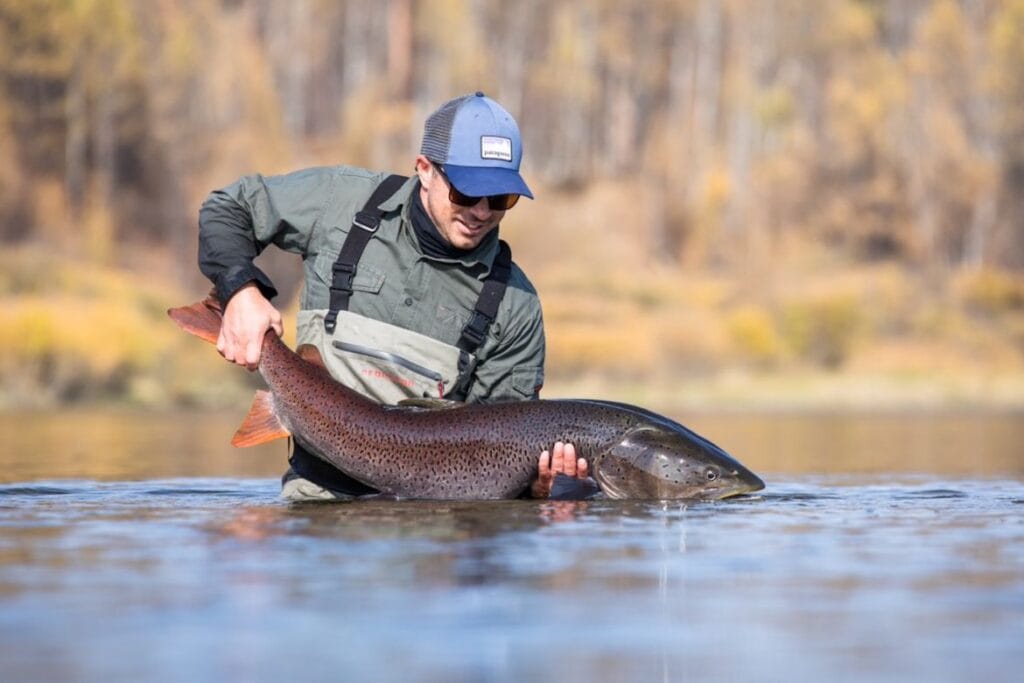
They are territorial apex predators that are conservative in their movements. They are not scattered evenly throughout the river and nor will they reveal themselves easily. The most productive water can often be the most subtle. It might be a seam against a cut bank or a small depression just below a riffle. They may hold in the outside bend of the river, tucked up against structure or in the quiet margin adjacent to the main current where temperature and colour shifts occur.
Unlike trout that feed opportunistically throughout the day, taimen often feed in narrow windows—low light, to a falling barometer, or during subtle seasonal transitions. Fishing for taimen is about the commitment to the act of fishing for them. Its not about how fast you cover the water, but how methodically you do so. Casting and presentation should be deliberate with a good understanding about how little energy a large predator is actually willing to expend. Replicating vulnerablility is key. You need to convince your taimen its worth their while.
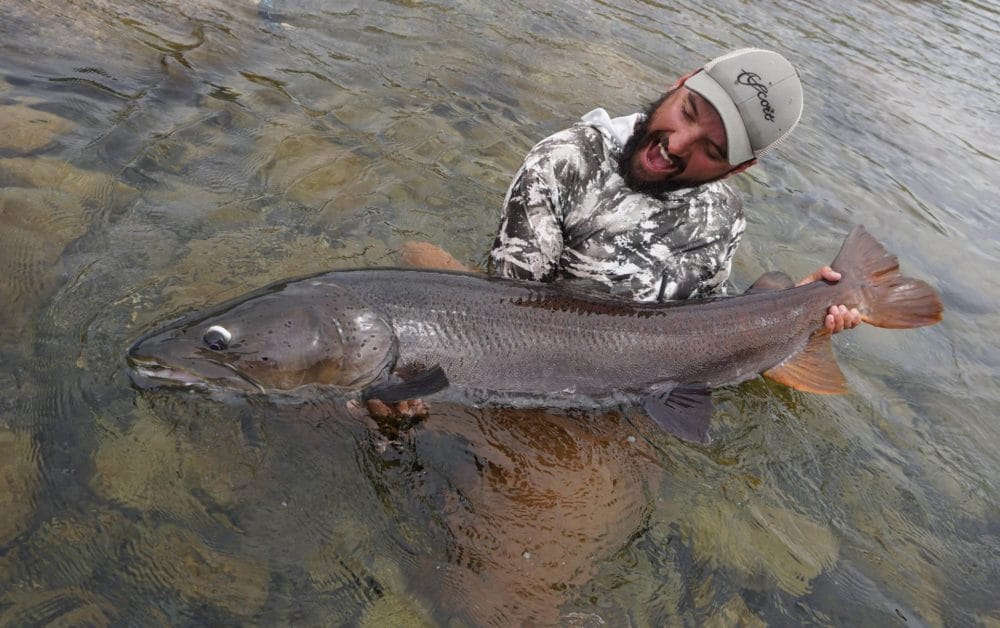
Mongolian taimen rivers are typically broad, freestone systems with long glides, deep cut banks, woody structure, and soft inside seams. The fish hold where effort is minimized and ambush is maximized. Reading taimen water is less about spotting fish and more about eliminating water that won’t hold one. If a piece of water looks too obvious, it probably is. Taimen prefer subtle advantages.
Mongolia’s taimen fisheries exist because of restraint, limited pressure, strict catch-and-release policies, and local stewardship. Every fish landed should be handled minimally, kept in the water, and released promptly. Photography is secondary. Measurement is optional. Memory should be sufficient.
Success in Mongolia is measured less by what you catch than by how you fish, by what you gain from your time spent in this wild and untouched corner of our world. It is not about numbers. It is about scale—of rivers, of time, and of responsibility. These fish do not belong to anglers. We are temporary visitors to a system that predates us and, with care, will outlast us.
To discuss a trip to Mongolia please contact Charlotte Chilcott or Alex Jardine or call the office on +44 1980 847389.
About the author: Charlotte Chilcott.