Fly fishing in Africa offers something increasingly rare in the modern world: the opportunity for genuine discovery and the ability to make a real difference. Conservation plays a key role in protecting these remote rivers and travelling anglers are the lead players in enabling this to happen. Across the continent, rivers still run through landscapes where the wildlife outnumber people and where many fisheries remain lightly pressured or entirely unexplored.
Travelling with a fly rod in this vast and diverse continent can take you from casting to tigerfish in a broad floodplain channel to drifting a nymph through a clear mountain riffle for bronze-backed yellowfish. From fishing at night under a canopy of stars for Nile perch to fishing during the day with elephants browsing in the background, every location has something very different to offer.
Fishing here is rarely just about the fish —it’s about the places they live, the journeys required to reach them, and the realisation that some of the world’s most exciting fly water still lies far off the beaten track. The beauty of any fishing trip to Africa is that you can combine it with so much more; whether a safari, time in winelands, trekking, climbing, or just unwinding on the beach.
For more information about any of our African destinations or safari trips please contact Charlotte Chilcott. Alternatively call the office on +44(0)1980 847389.
East Africa
Tanzania
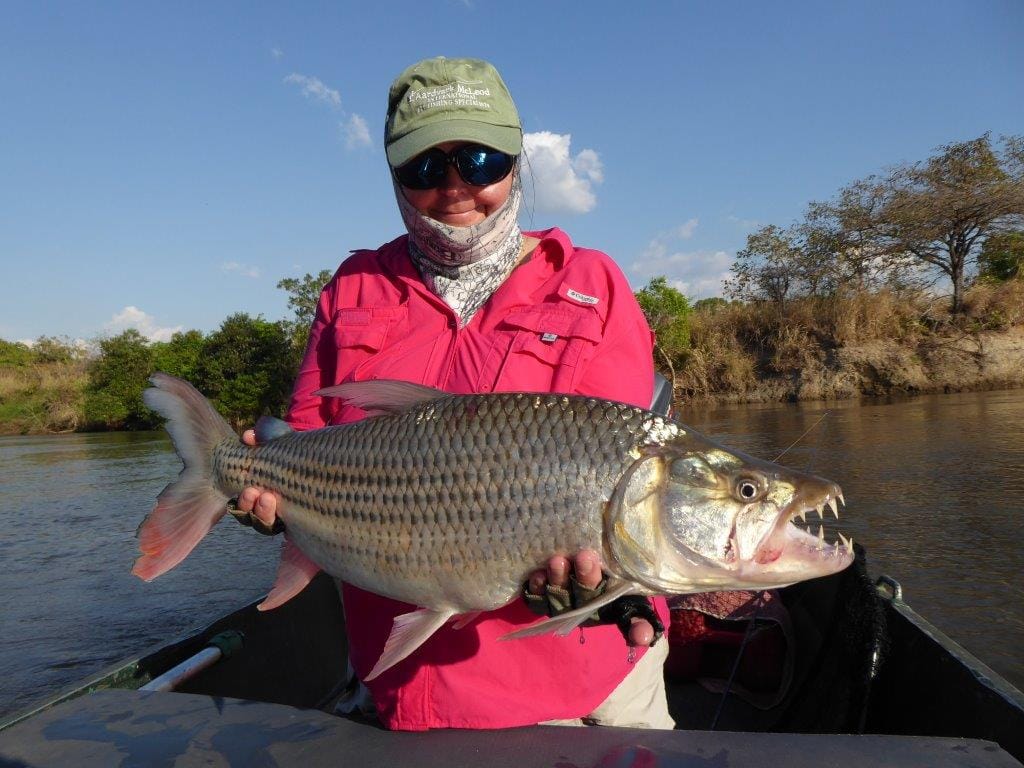
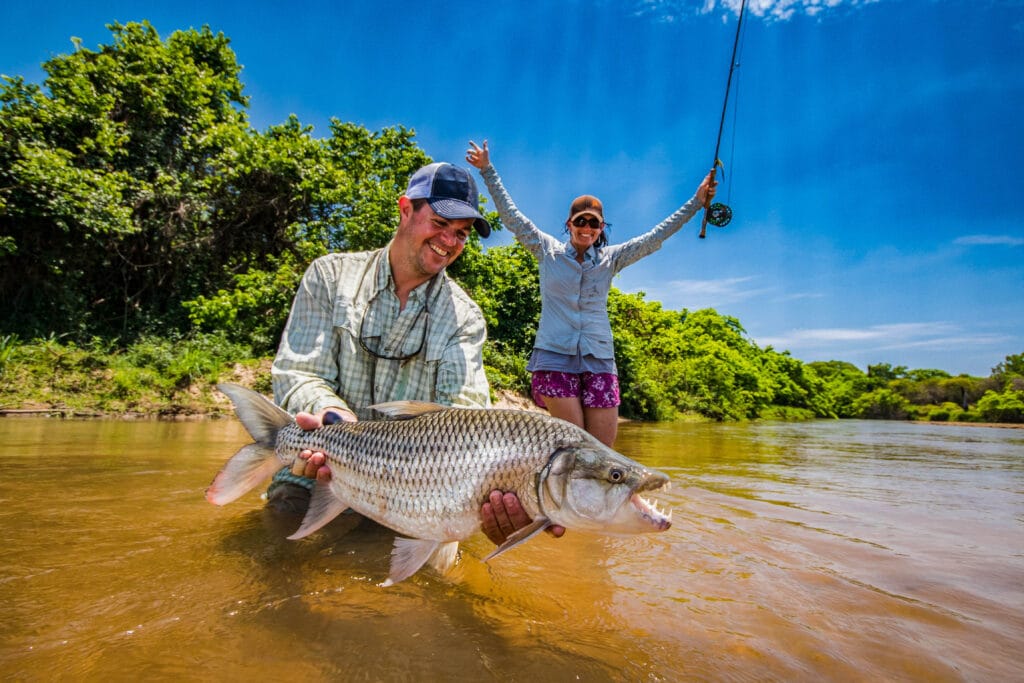
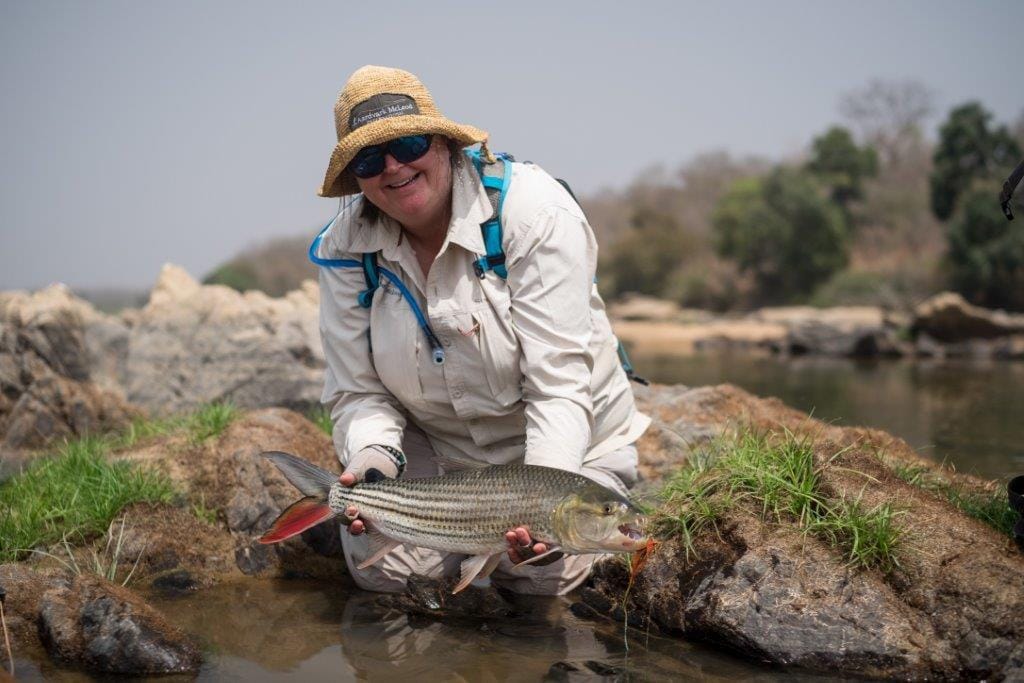
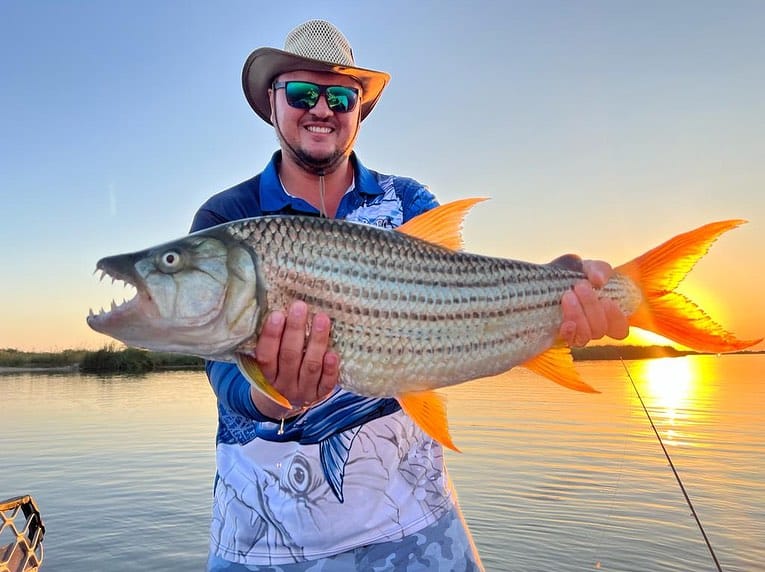
In south-western Tanzania, the Mnyera & Ruhudji Rivers have established a reputation as perhaps the most consistent trophy tigerfish fisheries on the continent. These freestone rivers flow through remote miombo woodland and are typically fished from aluminium boats, drifting banks, structure and current seams with large baitfish streamers. The fisheries are managed on a limited-rod basis, with typically no more than eight anglers per week and long beats that allow sections of river to rest between visits. Fish in the 10–20lb class are common and specimens exceeding 25lb are encountered each season. Strict catch-and-release policies and limited rod numbers have played an important role in maintaining the quality of the fishing. Conservation practices that involve the local communities help to ensure the long-term security of these river systems.
The confluence of these two river systems forms the Kilombero River which in turn joins the Luwengu River and eventually the Rufiji River which flows through Nyerere National Park. This predator rich downstream fishery has a huge amount of potential and is still relatively unexplored. Presentation is generally based around large baitfish imitations fished on intermediate or sink-tip lines. Anglers cast tight to structure and retrieve the fly quickly across the current seam, where tigerfish often intercept prey moving out from the bank.
Kenya
Few African countries offer such a striking contrast in fisheries. In a few hours of travel, you can move from the cool, mist covered highlands with their trout holding streams to the deep cobalt blue waters of the Indian Ocean were billfish patrol the offshore currents.
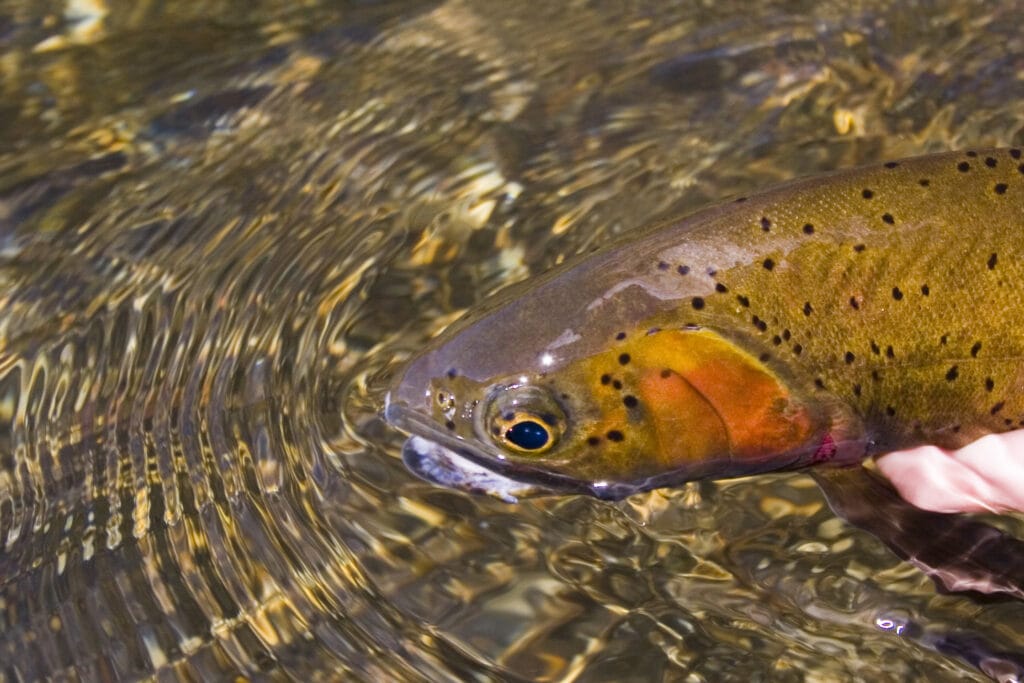
Kenya’s trout fisheries are centred around the cool headwaters that drain the Aberdare Range and the slopes of Mount Kenya. Introduced during the early twentieth century, brown and rainbow trout adapted well in these clear waters, where stable temperatures, and abundant insect life provide an ideal habitat. These rivers are typically narrow, heavily structured, and surprisingly technical. Your approach is critical. Fish are often concentrated in short pockets of deeper water beneath overhanging vegetation, undercut banks, or beneath the turbulence of small waterfalls. Long casts are rarely necessary; instead, success depends on careful positioning and controlled drifts through tight holding water.
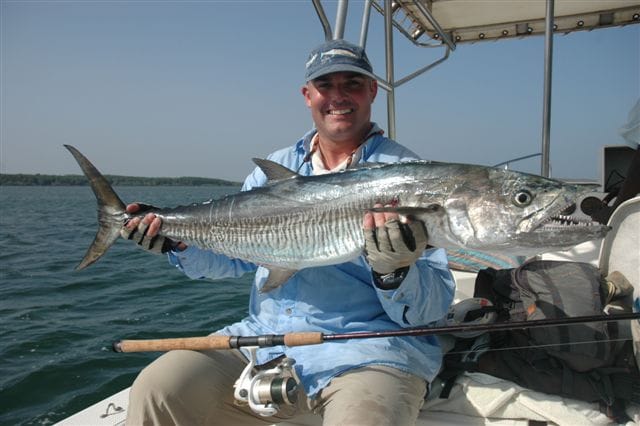
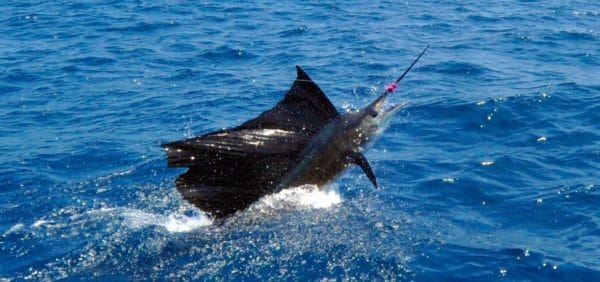
Kenya’s coastline offers a completely different angling proposition. The Indian Ocean’s warm currents and steep continental drop-offs bring large pelagic predators within reach of the coast. From bases such as Lamu, Watamu and Malindi, anglers can reach productive offshore waters in short runs. Sailfish, striped marlin, black marlin and blue marlin all patrol the area and these waters form part of East Africa’s most consistent billfish corridors.
Southern Africa
Botswana
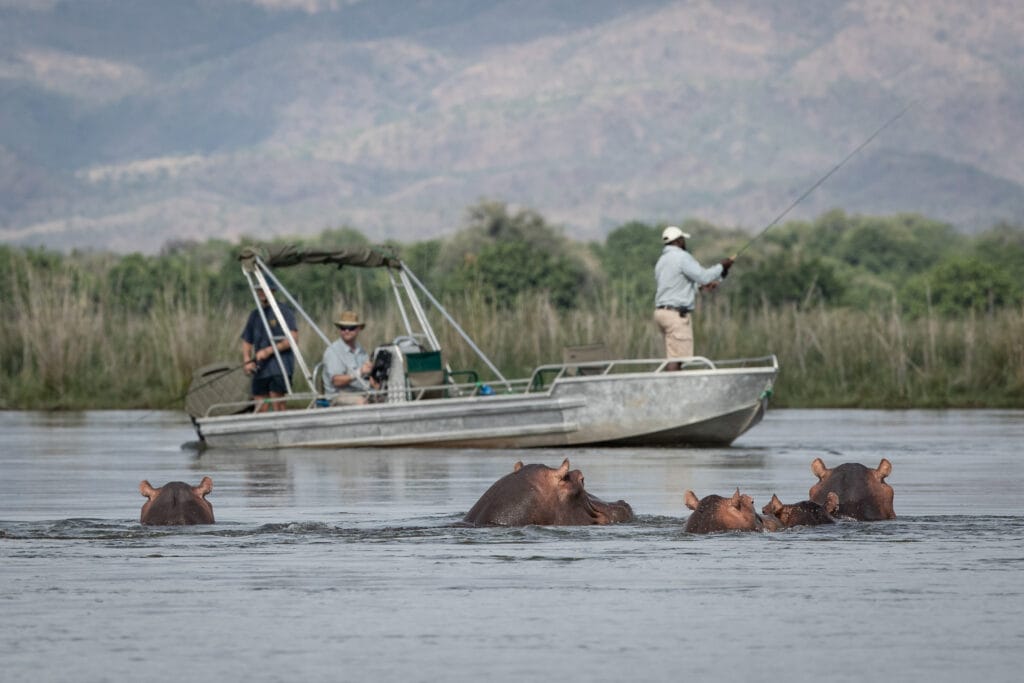
Tigerfish in Okavango Delta inhabit a very different environment to the structured rivers of East Africa. The delta is a vast alluvial fan of channels, lagoons and floodplains where water clarity, seasonal flood levels and baitfish movements strongly influence fishing conditions. Tigerfish here are generally smaller than those encountered in Tanzania, but numbers can be high and fish in the 6–15lb range are a realistic expectation. Fishing is typically conducted from shallow-draft boats working reed-lined channels, lagoons and main river systems where water clarity allows anglers to cover structure and current edges methodically. One notable seasonal event is the catfish run, during which shoals of African sharptooth catfish move through the system and disturb baitfish shoals. Tigerfish often feed actively around these aggregations, creating brief but intense opportunities for fly anglers casting large baitfish patterns into visibly feeding fish.
south Africa
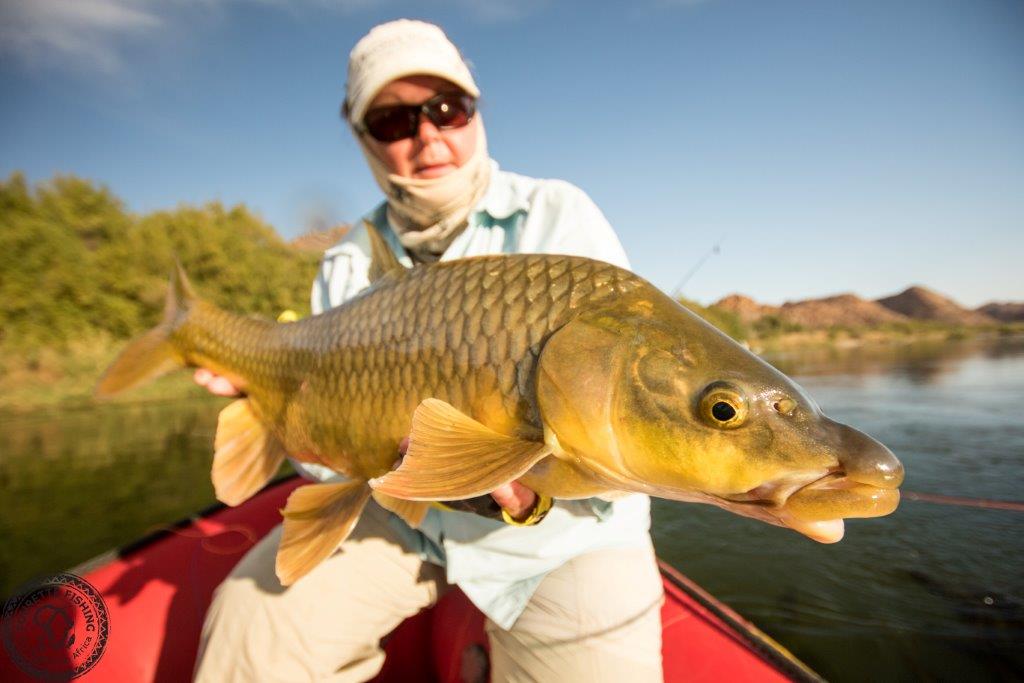
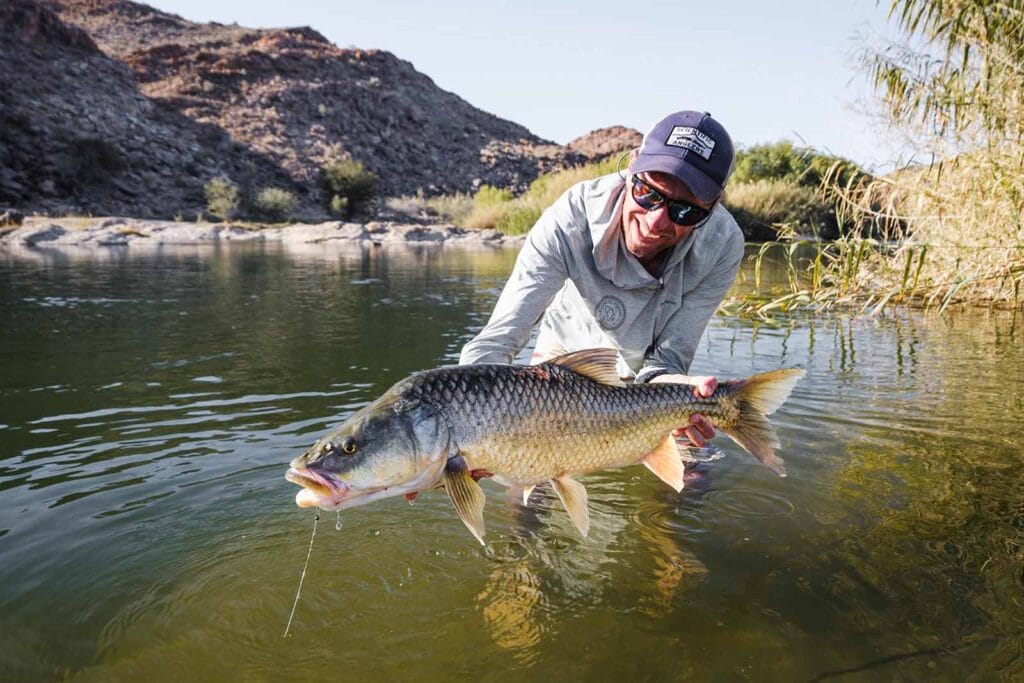
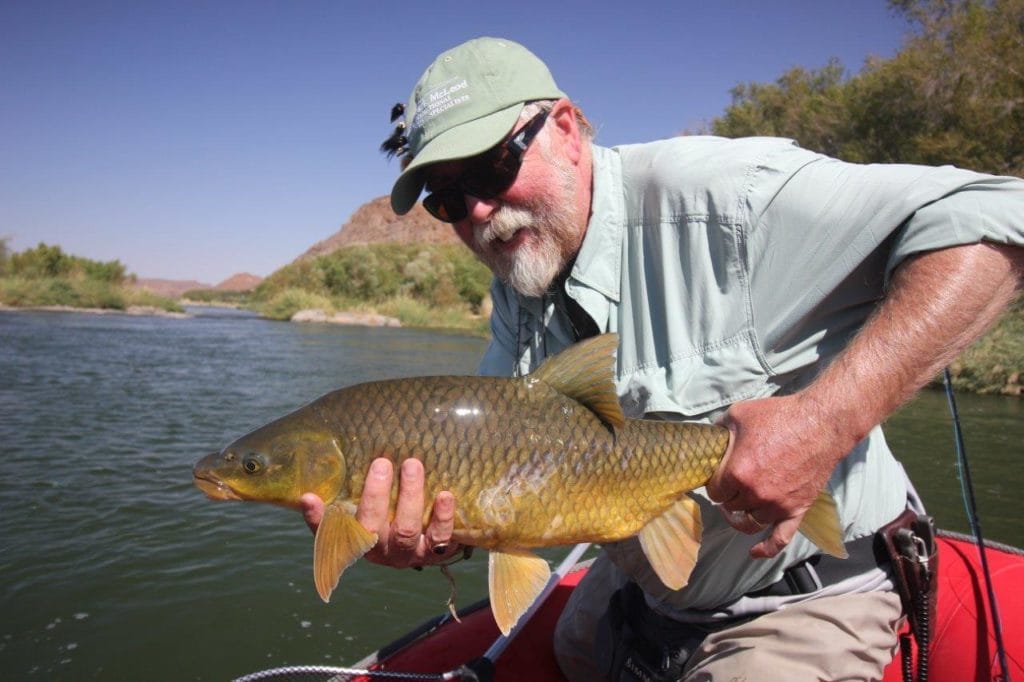
South Africa is a study in contrasts for the travelling angler, a country where clear, trout-streaked mountain streams tumble alongside vast rivers that pulse with yellowfish and barbel, and where the coastline offers offshore adventures for tuna and yellowtail kingfish. Inland, rivers such as the Vaal River, the Orange River and the Bokong River demand careful reading of current seams and riffles, rewarding anglers who can deliver a natural drift in fast, sun-sparkled water. Yellowfish occupy a niche that most non-South African’s underestimate. Often described as either “Africa’s trout” or “just a carp” both comparisons are convenient but misleading. The powerful largemouth or the more widespread smallmouth are river specialists shaped by current, temperature, and seasonal hydrology.
On the coast, the Indian and Atlantic Oceans converge to produce dynamic saltwater fisheries where tuna, kingfish, and the occasional giant trevally chase baitfish along reef edges and sandbars. For those wanting to shift from wading boots to boat deck, South Africa offers an unrivalled variety of technical freshwater and saltwater fishing within a single, accessible destination.
LESOTHO
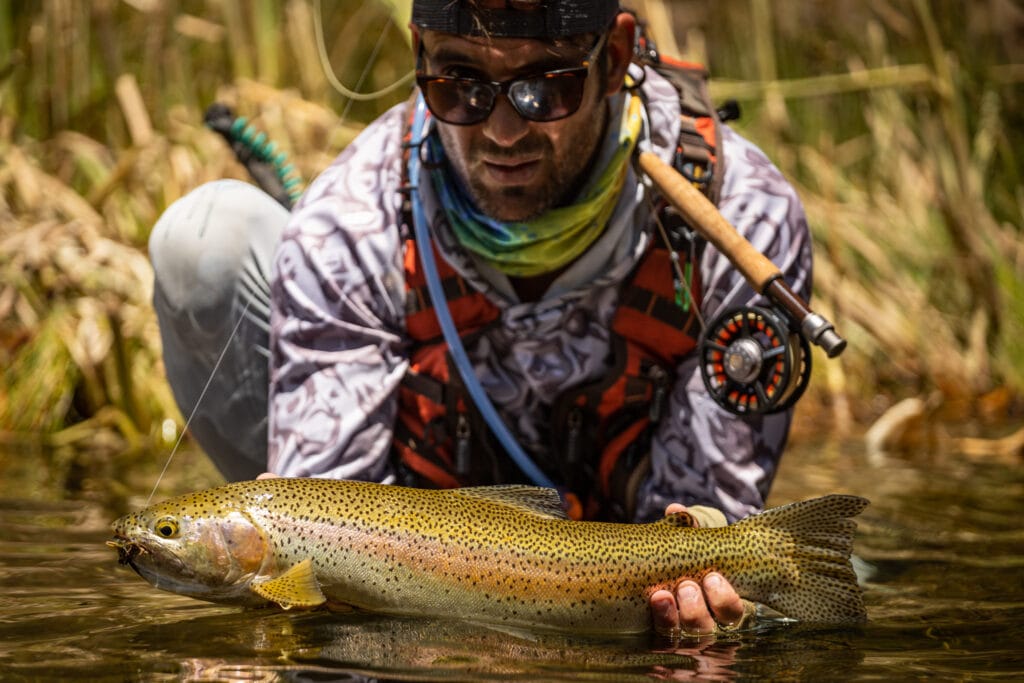
Lesotho’s rivers offer a rare combination of altitude, clarity, and technical challenge that few destinations can match. Nestled among the Drakensberg and Maloti Mountains, these streams host wild brown and rainbow trout in crystal-clear water. The fishing is intimate: long upstream casts are seldom needed, but careful drift and precise presentation are essential, as trout quickly spook in shallow riffles. In late summer, terrestrial insects drifting from surrounding grasslands provoke eager rises, and sight-fishing for trout alongside highland waterfalls or plunge pools becomes a quietly thrilling pursuit.
Lesotho’s rivers are also home to both smallmouth yellowfish which often surprise anglers in fast flowing water and largemouth yellowfish which prefer bigger pools and slower glides. For anglers craving wild scenery and technical freshwater fishing in its purest form, Lesotho’s highland streams remain a compelling, off-the-beaten-path destination.
Zambia and Zimbabwe
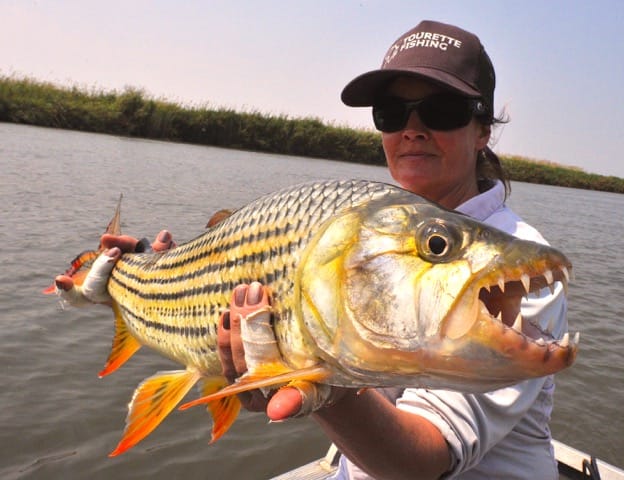
The Zambezi River provides some of the most historically significant tigerfish water in Africa, particularly along both the Upper and Lower Zambezi systems. The river’s seasonal flood cycle strongly influences fishing conditions. During the rising waters of the wet season the floodplains are inundated, allowing baitfish and juvenile species to disperse into the grasslands. As water levels recede, these prey species are forced back into the main channels, concentrating tigerfish along drop-offs, channels and current breaks. Fly anglers typically fish from boats, covering banks and structure with large streamers and wire-trace leaders to withstand the species’ interlocking teeth. Fish exceeding 10lb are regarded as notable captures, though larger specimens are taken each year. The tigerfish’s aggressive, aerial nature of often results in high attrition rates during the fight. In the far west of Zambia, the vast floodplains of Barotseland offer one of Africa’s most dynamic seasonal fisheries with larger than average tigerfish landed most seasons.
In contrast to the freestone river systems, Zimbabwe’s Lake Kariba offers a vast lacustrine environment where tigerfish patrol submerged structure, river mouths and open water bait concentrations. Fly fishing here often involves covering drop-offs and submerged timber with fast-retrieved streamers, although conventional tackle is still widely used in the lake environment. Fish of 8 to 17lb are typical here, with occasional larger individuals encountered. The late dry-season months, when water levels are stable and baitfish are concentrated, generally provide the most consistent fishing conditions.
mOZAMBIQUE
Tigerfish extend throughout the lower reaches of the Zambezi basin into Mozambique, including the large impoundment of Lake Cahora Bassa. This enormous body of water supports a productive pelagic food chain, allowing tigerfish to reach substantial sizes where forage species are abundant. Although conventional lure fishing and trolling dominate the fishery, fly fishing can be productive along river mouths, shoreline structure and areas where baitfish are concentrated by wind or current. Anglers typically employ heavier tackle than on smaller river systems, often using nine or ten weight rods paired with large baitfish patterns designed to imitate the small tilapia, sardine-like clupeids and juvenile cichlids that form the core of the tigerfish diet.
nAMIBIA
The Caprivi Strip in north-eastern Namibia offers access to several productive tigerfish rivers including the Kwando River, Chobe River and the upper reaches of the Zambezi itself. These systems form part of a complex network of floodplains and channels connected to the Okavango and Zambezi basins. Fishing conditions vary widely depending on seasonal water levels, but tigerfish are typically encountered around reed beds, submerged timber and current seams where baitfish congregate. Fly anglers often fish from boats drifting along the banks or casting into current edges created by bends in the river. Average fish size is generally similar to neighbouring Botswana waters, though occasional larger specimens are present in deeper sections of the main rivers.
West & Central Africa
Cameroon
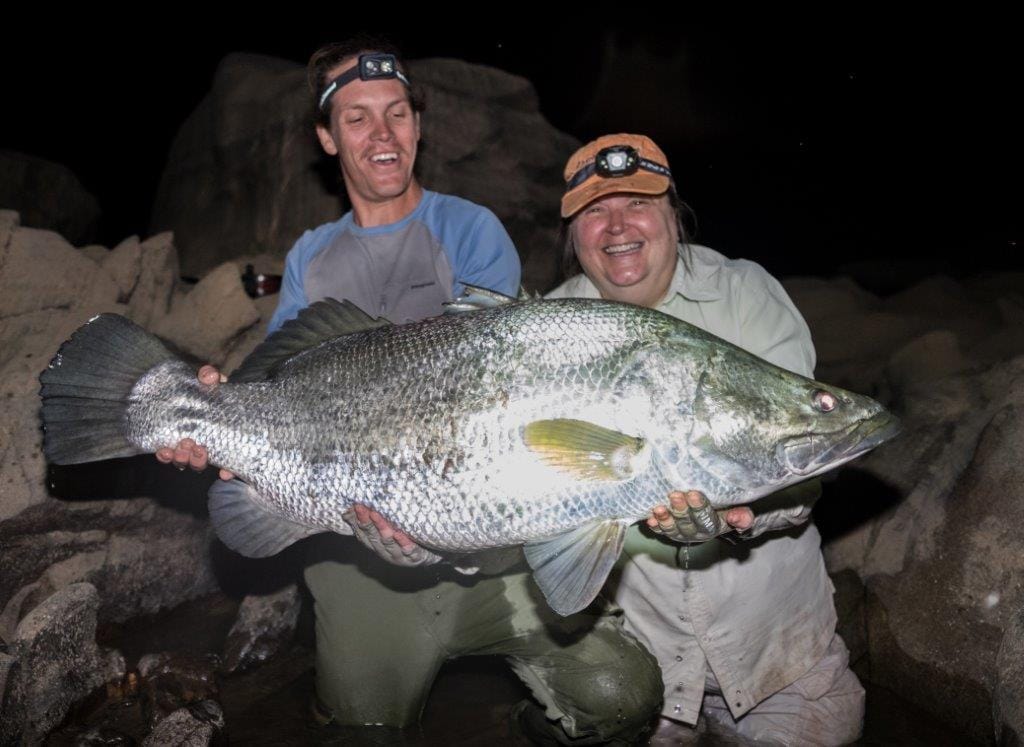
A more recent addition to the African fly-fishing map is the Faro River, in the remote savannah landscapes of northern Cameroon. The fishery is unusual in that it supports multiple tigerfish species alongside large Nile perch, creating a multi-species freshwater destination. Fishing here is conducted primarily on foot along rocky runs, pools and canyon-like sections of the river. Tigerfish are typically targeted during morning and afternoon sessions using floating or sink-tip lines paired with baitfish patterns, while heavier tackle is reserved for night fishing for Nile perch. Anglers commonly fish nine-weight outfits with short wire bite tippets and relatively heavy leaders.
Gabon
Fishing in Gabon is an adventure into some of Africa’s most pristine and bio-diverse freshwater systems, where rivers wind through dense rainforest before draining into the Atlantic. The country’s waterways offer anglers opportunities to target tigerfish, Nile perch and a wide array of catfish and cichlids, often in waters largely untouched by sport fishing.
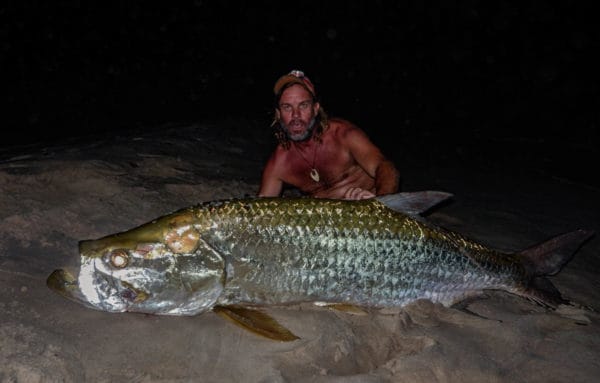
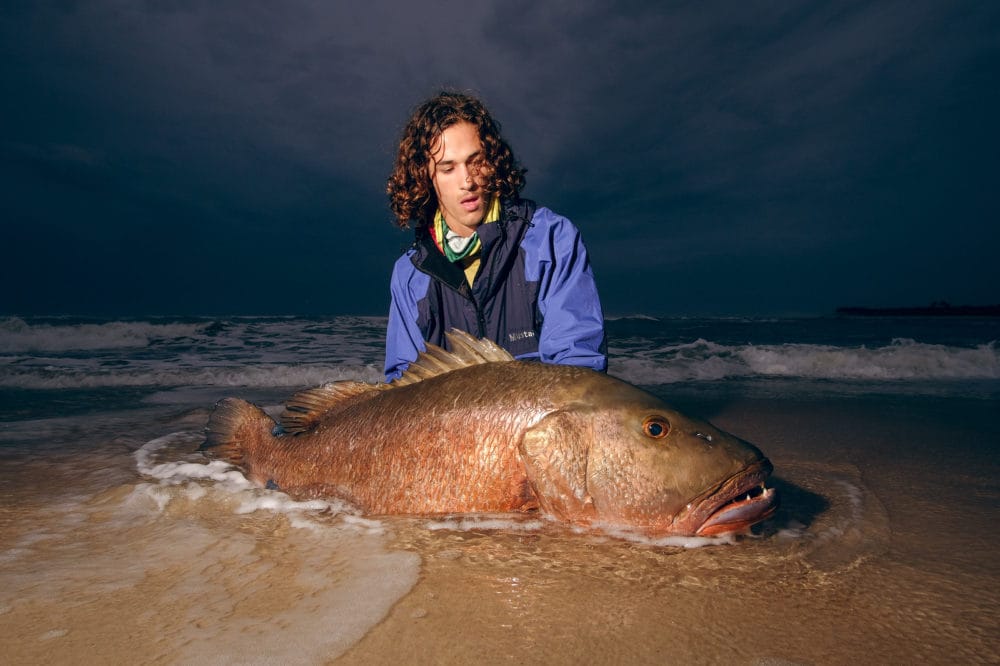
Gabon’s coastal fishing is another dimension entirely, taking advantage of the country’s long, relatively undeveloped Atlantic coastline and rich estuarine systems. Rivers and their tributaries create estuaries and mangrove channels where freshwater mixes with the sea, attracting a range of both resident and migratory species including specimen tarpon, Cubera snapper and jacks. The combination of remote rainforest scenery, wild rivers, and explosive predator action makes Gabon one of Africa’s most exciting and under-the-radar fishing destinations, where patience and skill are richly rewarded.
congo
The vast Congo River basin supports the largest tigerfish species, including the formidable Goliath tigerfish. Fishing in both the Republic of the Congo (ROC) and the Democratic Republic of the Congo (DRC) is still relatively undiscovered, primarily because of lack of infrastructure in the former and the political situation in the latter. However, both offer some of the wildest and potentially productive freshwater experiences in Africa. The ROC’s rivers flow through largely intact rainforest, floodplains, and Savannah corridors while fishing in the DRC is quite different. The DRC encompasses the vast central Congo Basin—the world’s second-largest rainforest and river system. Its fisheries are extensive, remote, ecologically rich and difficult to access. Both have arguably the most bio-diverse freshwater fishing on the planet that are largely unexplored by international anglers.
If you would like to hold space or get more details, please contact Charlotte Chilcott. Alternatively call the office on +44(0)1980 847389.
More about the author; Charlotte Chilcott.